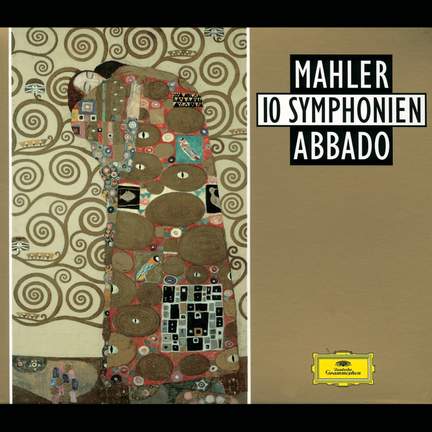
Mahler: Complete Symphonies
Cheryl Studer (soprano - No. 2), Waltraud Meier (mezzo - No. 2), Jessye Norman (mezzo - No. 3), Frederica von Stade (mezzo - No. 4), Sylvia McNair, Andrea Rost (sopranos - No. 8), Anne Sofie von Otter, Rosemarie Lang (mezzos - No. 8), Peter Seiffert (tenor - No. 8), Jan-Hendrik Rootering, Bryn Terfel...
Awards:
-
Building a Library, November 2019, Recommended Recording

The current pre-eminence of Gustav Mahler in the concert hall and on disc isn't something that could have been anticipated – other than by the composer himself. Hard now to believe that his...
Mahler: Complete Symphonies
Cheryl Studer (soprano - No. 2), Waltraud Meier (mezzo - No. 2), Jessye Norman (mezzo - No. 3), Frederica von Stade (mezzo - No. 4), Sylvia McNair, Andrea Rost (sopranos - No. 8), Anne Sofie von Otter, Rosemarie Lang (mezzos - No. 8), Peter Seiffert (tenor - No. 8), Jan-Hendrik Rootering, Bryn Terfel...
Purchase product

We pay more royalties to artists and composers than any other streaming service with our innovative Fair Play pay-per-second model
We pay artists and composers fairly with our pay-per-second model
Awards:
-
Building a Library, November 2019, Recommended Recording
The current pre-eminence of Gustav Mahler in the concert hall and on disc isn't something that could have been anticipated – other than by the composer himself. Hard now to believe that his...
About
Contents and tracklist
Work length54:43
This work is only available as an album download.
- Berliner Philharmoniker
- Claudio Abbado
- Recorded: 1989-12-14
- Recording Venue: Philharmonie, Berlin
1. Langsam. Schleppend
Track length16:13
This track is only available as an album download.
2. Kräftig bewegt
Track length7:23
This track is only available as an album download.
3. Feierlich und gemessen, ohne zu schleppen
Track length10:32
This track is only available as an album download.
4. Stürmisch bewegt
Track length20:35
This track is only available as an album download.
- Erwin Ortner, Cheryl Studer (soprano), Waltraud Meier (contralto)
- Wiener Philharmoniker, Arnold Schoenberg Chor
- Claudio Abbado
- Recorded: 1992-11-05
- Recording Venue: Grosser Saal, Musikverein, Wien
- Jessye Norman (soprano), Norbert Balatsch (chorus master)
- Wiener Philharmoniker, Wiener Staatsoper, Wiener Sängerknaben
- Claudio Abbado
- Recorded: 1980-09
- Recording Venue: Grosser Saal, Musikverein, Wien
1. Kräftig. Entschieden
Track length7:01
This track is only available as an album download.
6.- Langsam. Tempo I
Track length7:36
This track is only available as an album download.
- Gerhart Hetzel (violin), Frederica von Stade (mezzo-soprano)
- Wiener Philharmoniker
- Claudio Abbado
- Recorded: 1977-05-20
- Recording Venue: Grosser Saal, Musikverein, Wien
1. Bedächtig. Nicht eilen - Recht gemächlich
Track length16:05
This track is only available as an album download.
2. In gemächlicher Bewegung. Ohne Hast
Track length9:11
This track is only available as an album download.
3. Ruhevoll (Poco adagio)
Track length23:25
This track is only available as an album download.
4. Sehr behaglich: "Wir genießen die himmlischen Freuden"
Track length9:02
This track is only available as an album download.
- Gerd Seifert (horn)
- Berliner Philharmoniker
- Claudio Abbado
- Recorded: 1993-05-12
- Recording Venue: Grosser Saal, Berlin Philharmonie
1. Trauermarsch (In gemessenem Schritt. Streng. Wie ein Kondukt - Plötzlich schneller. Leidenschaftlich. Wild - Tempo I)
Track length12:36
This track is only available as an album download.
2. Stürmisch bewegt. Mit größter Vehemenz - Bedeutend langsamer - Tempo I subito
Track length14:46
This track is only available as an album download.
3. Scherzo (Kräftig, nicht zu schnell)
Track length17:26
This track is only available as an album download.
4. Adagietto (Sehr langsam)
Track length9:00
This track is only available as an album download.
5. Rondo-Finale (Allegro)
Track length15:40
This track is only available as an album download.
Work length1:23:26
This work is only available as an album download.
- Chicago Symphony Orchestra
- Claudio Abbado
- Recorded: 1980-02-16
- Recording Venue: Orchestra Hall, Chicago
1. Allegro energico, ma non troppo. Heftig aber Markig
Track length23:30
This track is only available as an album download.
2. Scherzo (Wuchtig)
Track length13:12
This track is only available as an album download.
3. Andante moderato
Track length15:53
This track is only available as an album download.
4. Finale (Allegro moderato)
Track length30:51
This track is only available as an album download.
Work length1:21:09
This work is only available as an album download.
- Andrea Rost (soprano), Cheryl Studer (soprano), Jan-Hendrik Rootering (bass), Dietrich Knothe (chorus master), Bryn Terfel (baritone), Sylvia McNair (soprano), Peter Seiffert (tenor), Pavel Kühn (chorus master), Rosemarie Lang (contralto), Anne Sofie von Otter (contralto), Gerhard Schmidt-Gaden (chorus master)
- Berliner Philharmoniker, Rundfunkchor Berlin, Prague Philharmonic Chorus, Toelzer Knabenchor
- Claudio Abbado
- Recorded: 1994-02-11
- Recording Venue: Grosser Saal, Berlin Philharmonie
"Komm! hebe dich zu höhern Sphären" - "Blicket auf zum Retterblick"
Track length7:16
This track is only available as an album download.
- Chicago Symphony Orchestra
- Claudio Abbado
- Recorded: 1984-01
- Recording Venue: Orchestra Hall, Chicago
4. Nachtmusik: (168:187)
Track length7:45
This track is only available as an album download.
- Wiener Philharmoniker
- Claudio Abbado
- Recorded: 1987-05
- Recording Venue: Grossersaal, Konzerthaus, Vienna (Wien)
- Wiener Philharmoniker
- Claudio Abbado
- Recorded: 1985-06
- Recording Venue: Grosser Saal, Musikverein, Wien
Awards and reviews
 2010
2010
The current pre-eminence of Gustav Mahler in the concert hall and on disc isn't something that could have been anticipated – other than by the composer himself. Hard now to believe that his revival had to wait until the centenary celebrations of his birth in 1960. And yet by 1980 he was more widely esteemed than his longer-lived contemporaries Sibelius and Strauss and could suddenly be seen to tower over 20th-century music much as Beethoven must have done in a previous age. By this time too, a new generation of conductors had come to the fore, further transforming our perceptions of the composer.
Claudio Abbado is arguably the most distinguished of this group and, while his interpretations will not satisfy every listener on every occasion, they make an excellent choice for the library shelves, when the price is reasonably competitive and the performances so emblematic (and arguably central to our understanding) of Mahler's place in contemporary musical life.
Of the alternatives, Haitink's package has the fewest expressive distortions while Bernstein's is the most ceaselessly emotive of them all; neither has Abbado's particular combination of qualities.
It's probably no accident that Donald Mitchell's notes for this set are focused on the nature of Mahler's 'modernity'. For it's that ironic, inquisitive, preternaturally aware young composer who haunts this conductor's performances. Not for Abbado the heavy, saturated textures of 19thcentury Romanticism, nor the chilly rigidity of some of his own 'modernist' peers. Instead an unaffected warmth and elegance of sound allows everything to come through naturally – in so far as the different venues and DG's somewhat variable technology will permit – even in the most searingly intense of climaxes.
Abbado presents Mahler as a fluent classicist, and is less concerned to characterise the surface battle of conflicting emotions than to elucidate the underlying symphonic structure. The lack of Solti's brand of forthright theatricality can bring a feeling of disappointment. But even where he underplays the drama of the moment, sufficient sense of urgency is sustained by a combination of well-judged tempos, marvellously graduated dynamics and precisely balanced, ceaselessly changing textures. The propulsion comes from within.
It was in November 1907 that Mahler famously told Sibelius that 'the symphony must be like the world. It must embrace everything.' And perhaps it's only today that we see this as a strength rather than a weakness in his music. He wrote music that's 'about' its own past while at the same time probing into all our futures, music that's so all-embracing and communicates with such directness that we can make it 'mean' whatever we want it to, confident that we alone have really understood the code. Abbado lacks Bernstein's desire to explore these limitless possibilities, but some will count that as a blessing.
These are committed and authoritative performances.