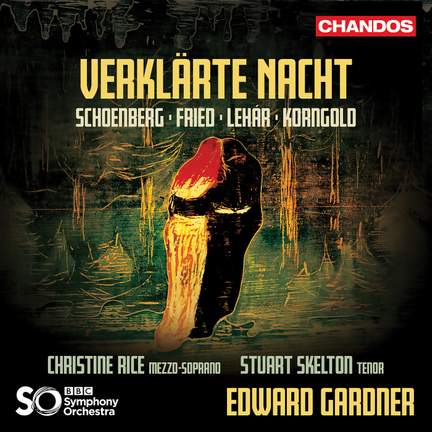
Special offer. Verklärte Nacht
Schoenberg - Fried - Lehár - Korngold
Christine Rice (mezzo), Stuart Skelton (tenor), BBC Symphony Orchestra, Edward Gardner
Awards:
-
Presto Recording of the Week, 1st January 2021

Across the programme Edward Gardner is preternaturally attentive, nailing the volatile blend of schmaltz and suffering that underpins the Lehár; and cloaking the moonbathing opening of the Fried...
Special offer. Verklärte Nacht
Schoenberg - Fried - Lehár - Korngold
Christine Rice (mezzo), Stuart Skelton (tenor), BBC Symphony Orchestra, Edward Gardner
Purchase product

Awards:
-
Presto Recording of the Week, 1st January 2021
Across the programme Edward Gardner is preternaturally attentive, nailing the volatile blend of schmaltz and suffering that underpins the Lehár; and cloaking the moonbathing opening of the Fried...
About
Hot on the heels of their acclaimed recording of Britten’s Peter Grimes, Stuart Skelton and Edward Gardner join forces with Christine Rice and the BBC Symphony Orchestra for this fascinating programme of early twentieth-century works. Schoenberg’s Verklärte Nacht needs no introduction, but far rarer is Oscar Fried’s contemporaneous setting of the same poem. Composed in 1901 for soloists and orchestra, Fried’s version is a true setting of (as opposed to Schoenberg’s reflection on) the text by Richard Dehmel. Lehár wrote Fieber in 1915 as the closing part of his song cycle Aus eiserner Zeit – he then made the orchestral setting a year later. Korngold’s Lieder des Abschieds (Songs of Farewell) date from the early 1920s, whilst he was still in Vienna, and shortly after he had completed the opera Die tote Stadt. Setting poetry by Christina Rossetti, Edith Ronsperger, and Ernst Lothar, the cycle is a poignant reflection on the Great War.
Contents and tracklist
- Stuart Skelton (tenor)
- The BBC Symphony Orchestra
- Edward Gardner
- Christine Rice (mezzo-soprano), Stuart Skelton (tenor)
- The BBC Symphony Orchestra
- Edward Gardner
- The BBC Symphony Orchestra
- Edward Gardner
- Stuart Skelton (tenor)
- The BBC Symphony Orchestra
- Edward Gardner
Spotlight on this release
-
Verklärte Nacht from Edward Gardner and the BBC Symphony Orchestra
1st Jan 2021
Schoenberg's masterpiece is framed by works for voice and orchestra (also on the theme of 'transfigured night') by Franz Lehár, Oskar Fried, and Erich Korngold.

Awards and reviews
-
Presto Recording of the Week1st January 2021
 February 2021
Across the programme Edward Gardner is preternaturally attentive, nailing the volatile blend of schmaltz and suffering that underpins the Lehár; and cloaking the moonbathing opening of the Fried with a velvety sumptuousness that prefigures the ensuing vocal refulgence…Adventurously conceived, and with the BBC Symphony Orchestra on top form, this is a stimulating disc from first note to last.
 1st January 2020
As his recent recording of Peter Grimes with Gardner attested, Skelton does anguished delirium very well, though if anything he sounds in healthier voice here...Gardner’s pacing of the big climaxes is once again absolutely spot-on, and the Chandos engineers work their usual wonders in providing ample space for the sound to glow or blaze as required.
 7th January 2021
[The Schoenberg] in its orchestral version, is the pivotal piece on this recording, and it finds Edward Gardner drawing playing of sumptuous intensity but also ravishing delicacy from the strings of the BBC Symphony Orchestra...But it’s the rest of the repertoire that makes this disc especially interesting...Gardner always seems to bring out the best in Skelton.