Bach, J S: Mass in B minor, BWV232
Lynne Dawson, Carol Hall, Nancy Argenta, Mary Nichols, Michael Chance, Ashley Stafford, Wynford Evans, Howard Milner, Andrew Murgatroyd, Lloyd Morgan, Stephen Varcoe
Monteverdi Choir & English Baroque Soloists, John Eliot Gardiner
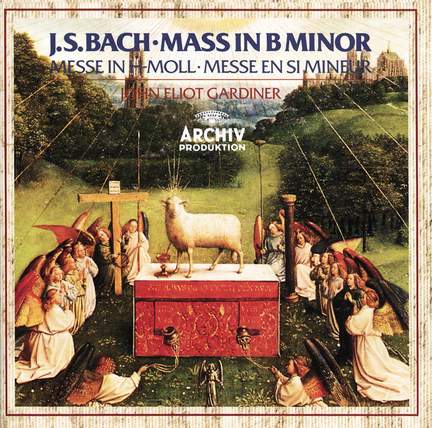
Awards:
-
Gramophone Magazine, July 2026, 100 Greatest Recordings

-
Presto Favourites, Recommended Recording

Gardiner bases his forces on the famous memorandum which Bach handed to the Leipzig town council in 1730 outlining the vocal and instrumental requirements for performances of his church music....
Bach, J S: Mass in B minor, BWV232
Lynne Dawson, Carol Hall, Nancy Argenta, Mary Nichols, Michael Chance, Ashley Stafford, Wynford Evans, Howard Milner, Andrew Murgatroyd, Lloyd Morgan, Stephen Varcoe
Monteverdi Choir & English Baroque Soloists, John Eliot Gardiner
Purchase product

We pay more royalties to artists and composers than any other streaming service with our innovative Fair Play pay-per-second model
We pay artists and composers fairly with our pay-per-second model
Awards:
-
Gramophone Magazine, July 2026, 100 Greatest Recordings
-
Presto Favourites, Recommended Recording
Gardiner bases his forces on the famous memorandum which Bach handed to the Leipzig town council in 1730 outlining the vocal and instrumental requirements for performances of his church music....
About
Contents and tracklist
- Nancy Argenta (soprano), Wynford Evans (tenor), Ashley Stafford (alto), Mary Nichols (mezzo-soprano), Lynne Dawson (soprano), Carol Hall (soprano), Stephen Varcoe (bass), Lloyd Morgan (bass), Andrew Murgatroyd (tenor), Jean Knibbs (soprano), Jane Fairfield (soprano), Collin Patrick (alto), Elizabeth Wilcock (violin), Lisa Beznosiuk (flute), Howard Milner (tenor), Michael Chance (countertenor), Sophia McKenna (oboe), Michael Thompson (french horn), Patrizia Kwella (soprano), Michael Chance (alto), Valerie Darke (oboe d amore)
- English Baroque Soloists, Monteverdi Choir
- Sir John Eliot Gardiner
- Recorded: 1985-02-04
- Recording Venue: All Saints' Church, Tooting, London
Spotlight on this release
-
JS Bach Choral & Vocal Works
20th Feb 2015
This week it's David's turn to attempt the impossible - whittling down the huge and distinguished choral discography of JS Bach and picking out the very best.

Awards and reviews
-
Gramophone MagazineJuly 2026100 Greatest Recordings
-
Presto FavouritesRecommended Recording
 2010
2010
Gardiner bases his forces on the famous memorandum which Bach handed to the Leipzig town council in 1730 outlining the vocal and instrumental requirements for performances of his church music. This results in a larger ripieno group. Gardiner also includes a harpsichord as well as an organ, the simultaneous playing of which, in Wolff's words, was 'a practice that can probably be assumed to be normative in the great majority of Bach's church music'. Gardiner uses women's voices for the soprano solo and ripieno lines and also a male alto soloist and male alto ripieno singers.
This is a fine achievement. Here the many strong points of his direction – a vital rhythmic understanding, a clear and positive sense of purpose, and a naturally affective response to Bach's music, combine in forming a concept of the work which not only explores its eneffable mysteries but also savours the magnificence of its architecture.The solo vocal line-up is a strong one and there are few weak moments; most of the soloists sing in the ripieno group as well, though Patrizia Kwella and Lynne Dawson appear to be exceptions to the rule. Nancy Argenta's 'Laudamus te', in which she is lightly partnered by Elizabeth Wilcock's sensitive violin playing is very fine and the singing of Mary Nichols who provides an expressive and wellbalanced partnership with Patrizia Kwella in the 'Et in unum Dominum' deserves special mention.
Michael Chance gives a beautifully controlled account of the 'Agnus Dei' and there are assured contributions elsewhere from Wynford Evans and Stephen Varcoe.
The crowning achievement of Gardiner's recording lies in the vitality, accuracy and homogeneity of the ripieno singing it is in no sense intended to underplay the considerable virtues of the soloists and the orchestra; but this, after all, is first a vocal work and foremost a choral one. The ripieno singing at its very best – as it is for example, in the 'Et resurrexit' – is thrilling and gives a fervent imprint to the entire work. There is a spontaneity about this singing to which few listeners could remain indifferent.
Gardiner's choruses are immediately striking and handled with such skill and rigorous discipline that repeated hearing in no sense diminishes their impact.
 2011 edition
Gardiner masterfully conveys the majesty (with bells and censer-swinging evoked) simultaneously with a crisply resilient rhythmic pulse. The choral tone is luminous and powerfully projected. The recording is warmly atmospheric but not cloudy.

It would be nothing short of a crime to exclude this benchmark recording of the B minor Mass; Nancy Argenta and Michael Chance particularly stand out among the soloists, and the Monteverdi Choir and English Baroque Soloists shine equally brightly in the choruses.