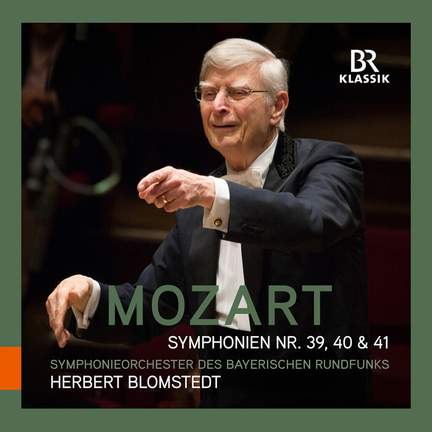
Mozart: Symphonies Nos. 39, 40 & 41
Symphonie-Orchester des Bayerischen Rundfunks, Herbert Blomstedt
Awards:
-
International Classical Music Awards, 2024, Nominated - Symphonic Music

[Blomstedt] must be the oldest conductor still at work with some of the world’s major orchestras, but there’s nothing old-fashioned about these warm and heartfelt performances of Mozart ’s last...
Mozart: Symphonies Nos. 39, 40 & 41
Symphonie-Orchester des Bayerischen Rundfunks, Herbert Blomstedt
Purchase product

Awards:
-
International Classical Music Awards, 2024, Nominated - Symphonic Music
[Blomstedt] must be the oldest conductor still at work with some of the world’s major orchestras, but there’s nothing old-fashioned about these warm and heartfelt performances of Mozart ’s last...
About
"For today’s musicologists, performers and concert-going audiences, Mozart’s final symphonies are still a veritable miracle. Why they were written remains a mystery, and no-one knows whether Mozart ever heard them performed during his lifetime. One thing is certain: Mozart created three individual, distinctive and unique works here, which complement each other despite their extreme diversity. The symphonies in E Major, K 543 (no. 39), G minor, K. 550 (no. 40), and C Major, K. 551 (no. 41, also known as “The Jupiter”) are the ones that most represent Mozart’s symphonic legacy to later generations of musicians. With its slow introduction, the Symphony in E flat major also opens the entire cycle, already giving the listener a sense of its highs and lows. As early as 1800, the popular ""Great"" G minor Symphony was praised as the “painting of a passion-stricken soul”. Like its big sister, the ""Jupiter"" Symphony in C Major, it numbers among the most-played works in classical music and has been immortalized in countless recordings. Nevertheless, these symphonies - probably the most profound ones before Beethoven - reveal themselves as something quite new in every interpretation. ""Mozart placed all the dark sides of human existence into his G minor Symphony"", says Herbert Blomstedt, adding that its “passion” continues to fascinate him. The eminent Swedish conductor Herbert Blomstedt, a close associate and regular guest conductor of the BRSO, conducted the E Major Symphony on December 18 and 19, 2019 in the Philharmonie at the Munich Gasteig, the G minor Symphony in concerts on January 31 and February 1, 2013 and the ""Jupiter"" Symphony on December 21 and 22, 2017 in the Herkulessaal of Munich’s Residenz. The new 2-CD set from BR-KLASSIK now presents these great cornerstones of Mozart's symphonic oeuvre –in the very best sound quality."
Contents and tracklist
Awards and reviews
-
International Classical Music Awards2024Nominated - Symphonic Music
 July 2023
[Blomstedt] must be the oldest conductor still at work with some of the world’s major orchestras, but there’s nothing old-fashioned about these warm and heartfelt performances of Mozart ’s last three symphonies – indeed, what ’s immediately striking about them is the degree to which Blomstedt has clearly taken note of historically informed performance practice.