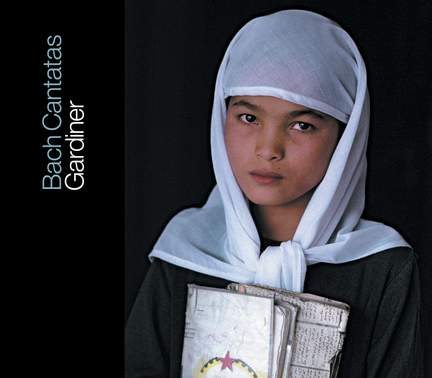
Bach Cantatas Volume 10
Cantatas for the Nineteenth Sunday after Trinity and for the Feast of the Reformation
Joanne Lunn, William Towers, James Gilchrist, Peter Harvey
The Monteverdi Choir & The English Baroque Soloists, John Eliot Gardiner
Awards:
-
Building a Library, September 2009, First Choice

-
Building a Library, March 2010, First Choice
-
Gramophone Magazine, January 2006, Disc of the Month

-
Presto Favourites, Recommended Recording

…Gardiner's lively and articulate responses to Bach's dance rhythms… refresh and enliven the music, often in a quite distinctive way. The mighty fugal chorus of Ein Feste Burg (BWV 80) comes...
Bach Cantatas Volume 10
Cantatas for the Nineteenth Sunday after Trinity and for the Feast of the Reformation
Joanne Lunn, William Towers, James Gilchrist, Peter Harvey
The Monteverdi Choir & The English Baroque Soloists, John Eliot Gardiner
Purchase product

Awards:
-
Building a Library, September 2009, First Choice
-
Building a Library, March 2010, First Choice
-
Gramophone Magazine, January 2006, Disc of the Month
-
Presto Favourites, Recommended Recording
…Gardiner's lively and articulate responses to Bach's dance rhythms… refresh and enliven the music, often in a quite distinctive way. The mighty fugal chorus of Ein Feste Burg (BWV 80) comes...
About
Alongside some magnificent, less well-known cantatas, this set contains two of Bach’s most famous works: the “Kreuzstab” Cantata BWV 56 for solo bass, expressing the desire to relieve Christ of the burden of the Cross, is an intimate yet intensely dramatic work, poignantly sung by Peter Harvey; BWV 80 “Ein feste Burg” is, by contrast, a monumental choral cantata celebrating the most intrinsically Lutheran festivity, the Feast of the Reformation - from the colossal, initial choral fugue to the final chorale it is a veritable rollercoaster!
Contents and tracklist
Spotlight on this release
-
JS Bach Choral & Vocal Works
20th Feb 2015
This week it's David's turn to attempt the impossible - whittling down the huge and distinguished choral discography of JS Bach and picking out the very best.

Awards and reviews
-
Gramophone MagazineJanuary 2006Disc of the Month
-
Presto FavouritesRecommended Recording
 September 2005
…Gardiner's lively and articulate responses to Bach's dance rhythms… refresh and enliven the music, often in a quite distinctive way. The mighty fugal chorus of Ein Feste Burg (BWV 80) comes off splendidly, with Bach's quotation of the hymn melody in the uppermost and lowest strands of the score emerging from the full textures with forceful energy.
 2010
2010
There is unpredictable excitement in the random way the fruits of John Eliot Gardiner's Bach Pilgrimage are being released, as the next steps of that memorable year are retraced with autumn cantatas from Leipzig (19th Sunday after Trinity) and three Reformation pieces.
Volume 10 represents another compelling reminder of what Gardiner can achieve in Bach when he has the wind behind him – 'living' these works appears to have fired the imagination.
The largest work here is Ein feste Burg (No 80) whose gothic arches of sound find rasping advocacy in the Schlosskirche on the site where Luther preached. His famous hymn is most effectively fortified with a rousing bass sackbut in the first chorus. Here and in the outstanding sister-piece Gott, der Herr (No 79), the performances are distinguished by a palpable immediacy.
The cathartic duet 'Wie selig' (No 80) from William Towers and James Gilchrist is a treasure.
The quality of music never lets up in Potsdam.
Wo soll ich fliehen hin (No 5) is one of the finest of Bach's chorale cantatas, its hymn nurtured by an arresting concerto style which conveys the gnawing presence of sin and the yearning to escape its insidious influence. The contrast between its opening fantasia and the radiant tenor aria 'Ergiesse' is skilfully negotiated: James Gilchrist relishes the transformation of the chorus's 'flight' motif into one of tactile pleasure as the divine spring washes away all man's blemishes.
Mention must be made of Peter Harvey's cultivated and flexible bass. Joanne Lunn is perhaps not ideal but the chorus and orchestra are in stirring form and the recorded sound is captivating.

The festival of the Reformation is, of course, quintessentially Lutheran, and Bach's cantata Ein' feste Burg is a large-scale statement of the Lutheran credo setting words by Luther himself (the famous hymn 'A mighty fortress is our God' lending its title to the whole work).