

US TARIFFS UPDATE | August 2025 | No impact expected on your Presto orders | Read full details
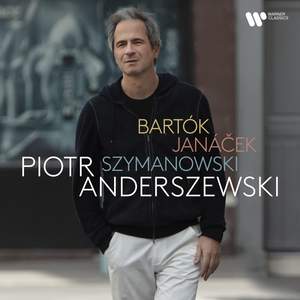
Special offer. Bartók, Janáček, Szymanowski
Piotr Anderszewski (piano)
Awards:
-
Gramophone Magazine, February 2024, Editor's Choice
-
Gramophone Awards, 2024 Shortlist, Finalist - Piano
-
Presto Recordings of the Year, Finalists 2024
From the very spare opening piece [of the Bartók] onwards, Anderszewski adopts quite deliberate tempos, but still finds the nervous, spiky energy required for example in No. 2 (one of Bartók’s...
Special offer. Bartók, Janáček, Szymanowski
Piotr Anderszewski (piano)
Purchase product
Awards:
-
Gramophone Magazine, February 2024, Editor's Choice
-
Gramophone Awards, 2024 Shortlist, Finalist - Piano
-
Presto Recordings of the Year, Finalists 2024
From the very spare opening piece [of the Bartók] onwards, Anderszewski adopts quite deliberate tempos, but still finds the nervous, spiky energy required for example in No. 2 (one of Bartók’s...
About
Piotr Anderszewski’s new album juxtaposes solo piano works by three composers who asserted and shaped the musical identity of their Central European countries in the earlier 20th century: Janáček in Moravia, Szymanowski in Poland, and Bartók in Hungary.
“The works on this album are imbued with a sense of rebellion,” says Anderszewski, himself a native of Warsaw. “There is no place here for stylisation or decorum. These works plumb the very roots of music.”
BBC Music Magazine wrote: "For anyone who loves Bach (or the piano) … this life-enhancing disc is required listening".
The Guardian gave the Bach album a ***** review: “Playing his own selection of pieces from Bach’s monumental work may be heresy, but Anderszewki’s intelligence, lucidity and joy is undeniable.
The influence of folk music is crucial in the programme – the second book of Janáček’s On an overgrown path (a collection named after a traditional Moravian wedding song), six of Szymanowski’s 20 mazurkas, and Bartók’s 14 Bagatelles. Szymanowski’s eclectic spirit is evident in the mazurkas, composed during Poland’s halcyon inter-war period as an autonomous state. Often chromatically adventurous, sometimes elusive, they fuse the traditional mazurka and the influence of Chopin with elements of the Goral music of Poland’s southern highlands. Piotr Anderszewski speaks of the music’s “primitive incantations, simultaneously ecstatic and severe in their beauty”.
Contents and tracklist
Spotlight on this release
-
An error occurred.
Try watching this video on www.youtube.com, or enable JavaScript if it is disabled in your browser.
-
An error occurred.
Try watching this video on www.youtube.com, or enable JavaScript if it is disabled in your browser.
Awards and reviews
-
Gramophone MagazineFebruary 2024Editor's Choice
-
Presto Recordings of the YearFinalists 2024
March 2024
From the very spare opening piece [of the Bartók] onwards, Anderszewski adopts quite deliberate tempos, but still finds the nervous, spiky energy required for example in No. 2 (one of Bartók’s own recital favourites) and No. 14. The mysterious textures in No. 3 are blurred to hypnotic effect.
February 2024
The level of detail is apt to leave you speechless. For most pianists, attaining that kind of exactitude requires a Faustian bargain in which the soul of the music (if not of the performer) is sacrificed. Not so here.
25th January 2024
. In the selection of six mazurkas from Szymanowski’s Op 50, a vast range of seductive colour is conjured from the keyboard, every dart and twist of the phrasing precisely fixed, with the wonderful clarity and slight sense of detachment that are so typical of Anderszewski’s playing.