Au Cinema Ce Soir
Jean-Marc Luisada (piano)
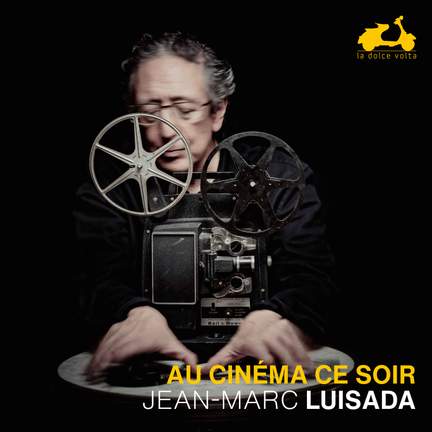
Au Cinema Ce Soir
Jean-Marc Luisada (piano)
Purchase product

About
“The cinema is probably the only place in the world where a man can cry, even sob without the slightest shame,” says Jean- Marc Luisada. Luisada is much more than a cinephile. Because he is first and foremost a storyteller, when he plays the piano he is inspired by the stories of the world, from the most banal to the most extraordinary, which he transmits to the audience from the concert platform.
In truth, his own playing - and that of his students, for he is one of the most sought after teachers - is, above all, retinal. He captures the vibrations of light, the waves of movement, the dialogues that have become silent on the written page and yet come back to life between his two hands at the piano. Hence we may wonder whether the image is printed on the score or reflected in a series of shots as conceived by a film director.
The resulting work, projected or published, is implacable in its logic; it invites us on a journey into the ineffable, to the intimate avowal of a Chopin mazurka or a silence in Bergman. Every director, like every composer, is the creator of their own atmosphere, one might almost say of their own scent that clings to the celluloid; and their films, the finest of them, the ones that give you a lump in the throat or make you laugh out loud, distil a unique mood, just like a movement for strings by Mahler.
Every movie accompanies a human destiny. A destiny that can be experienced in myriad costumes, languages, locales, and pieces of music: Mahler and Visconti’s Death in Venice, Brahms and Louis Malle’s The Lovers or André Delvaux’s Rendez-vous à Bray, Gershwin and Woody Allen’s Manhattan, Wagner and Visconti’s Ludwig, Rota and Fellini’s Casanova and La Dolce Vita, Chopin and Bergman’s Cries and Whispers, Joplin and George Roy Hill’s The Sting, Mozart and John Huston’s The Unforgiven... These moments of drama or delight represent much more than slices of life. They nourish our souls, like the greatest texts; we may remember them only imperfectly, but that doesn’t matter. Pieces of celluloid / pieces of music like this give us faith in the greatness of human beings, in their dreams, in their hopes, sometimes disappointed, but often thrilling.