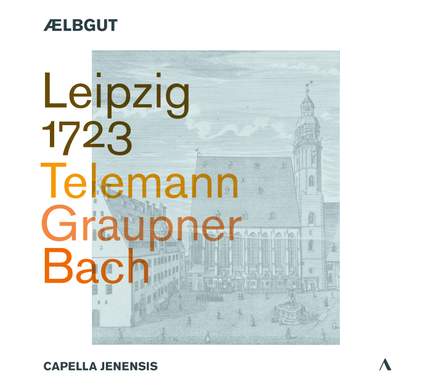
Leipzig 1723 - Telemann; Graupner; Bach
Ælbgut, Capella Jenensis
Beautifully performed by the Ælbgut ensemble and Capella Jenensis, this recording allows us to compare the three candidates’ submissions. Telemann’s cantata has the expected smooth eff iciency...
Leipzig 1723 - Telemann; Graupner; Bach
Ælbgut, Capella Jenensis
Purchase product

Beautifully performed by the Ælbgut ensemble and Capella Jenensis, this recording allows us to compare the three candidates’ submissions. Telemann’s cantata has the expected smooth eff iciency...
About
"1723 marked the beginning of a new era: Johann Sebastian Bach was appointed Thomaskantor in Leipzig and was about to leave his mark on German music history like hardly any other composer. But first, Georg Philipp Telemann, the actual preferred candidate, needed to withdraw from his appointment in favor of Hamburg. Christoph Graupner, the jury's next choice, was unable to take up the post because he didn't receive approval from his employer in Darmstadt. It's hard to believe that Bach was only the third choice! Immerse yourself in the fascinating application process and slip into the role of the jury! The OPUS-KLASSIK award-winning ensemble Ælbgut presents an exciting compilation of the three composers' specially prepared trial cantatas. For this, they are working together for the first time with the young baroque specialists from Capella Jenensis. Listen to the premiere recording of Graupner's ""Lobet den Herrn"" as well as Telemann's previously unpublished cantata ""Ich muß auf den Bergen weinen und heulen"" – a true rediscovery. Which candidate would you have chosen?"
Contents and tracklist
- Ælbgut, Capella Jenensis
- Ælbgut, Capella Jenensis
- Ælbgut, Capella Jenensis
- Ælbgut, Capella Jenensis
- Ælbgut, Capella Jenensis
Awards and reviews
 June 2023
Beautifully performed by the Ælbgut ensemble and Capella Jenensis, this recording allows us to compare the three candidates’ submissions. Telemann’s cantata has the expected smooth eff iciency but little emotional engagement with its text; Graupner’s two works, on the other hand, are almost worthy of Bach in their graceful and inventive expressiveness.