Sheet Music Downloads: Delivery is currently taking longer than usual. We’re working to restore instant access as soon as possible. Audio downloads are processing as normal.
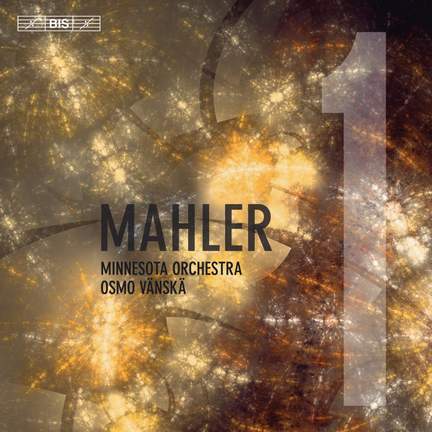
Mahler: Symphony No. 1 in D 'Titan'
Minnesota Orchestra, Osmo Vänskä
Awards:
-
BBC Music Magazine, November 2019, Orchestral Choice

Every dynamic marking, every nuance of rubato is scrupulously adhered to.
Mahler: Symphony No. 1 in D 'Titan'
Minnesota Orchestra, Osmo Vänskä
Purchase product

Awards:
-
BBC Music Magazine, November 2019, Orchestral Choice
Every dynamic marking, every nuance of rubato is scrupulously adhered to.
About
The shimmering string harmonics at the opening of Gustav Mahler’s First Symphony bring to mind the suspended breath of spring, and will have signalled even to the very first audiences that a new symphonic era was being ushered in. Soon enough the composer introduces some of the elements that would become key components of his musical language: sounds of nature (here cuckoo calls) are combined with quasi-militaristic fanfares and ‘high-art’ chromatic wanderings in cellos, as if to illustrate Mahler’s view of the symphony as an all-embracing art form. The symphony, which the composer originally gave the subtitle ‘Titan’, borrows extensively from the song cycle Lieder eines fahrenden Gesellen. But Mahler also incorporates elements of Moravian popular music (in the second movement) and – in the slow third movement – famously quotes a minor-mode version of the children’s rhyme Bruder Martin (also known as Frere Jacques). The finale transports the listener to a world of Gothic theatricality reminiscent of Grand Opera, before arriving – after a number of false starts – at the symphony’s heroic chorale-like ending. This symphonic ‘world-in-microcosm’ is here brought to life by the Minnesota Orchestra and Osmo Vanska on the fourth installment in a series which has earned the team the description ‘among the finest exponents of Mahler’s music’ on the website allmusic.com.
Contents and tracklist
Awards and reviews
-
BBC Music MagazineNovember 2019Orchestral Choice
 November 2019
Every dynamic marking, every nuance of rubato is scrupulously adhered to.
 October 2019
It may well be that more of the score is audible here than ever before. What’s lacking is less easily defined. Vänskä is not the first conductor to prize textual clarity over the lazier approach of Mitteleuropa…What’s missing en route is a certain geniality.
 November 2019
BIS provides excellent and well balanced sound reproduction on this SACD, in the end yielding as much detail in this symphony as I’ve ever heard before. In fact, this may be the finest sounding Mahler First ever, and on the performance side, this must be assessed as a very convincing account overall.