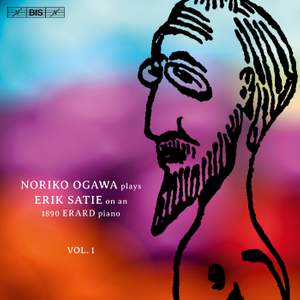


Satie: Piano Music, Vol. 1
Noriko Ogawa (piano)
In this utterly delightful disc [Ogawa] manages to convey not only Satie’s quirkiness, but his honesty…Ogawa does use the sustaining pedal, but sparingly. She also, as we know, has a fine technique... — More…
-
Presto Recording of the Week1st July 2016
-
Presto Recordings of the YearFinalist 2016


Downloads
What are FLAC and MP3?Contents
Satie: Six Gnossiennes
- Noriko Ogawa (piano)
- Recorded: August-September 2005
- Recording Venue: Studio, Tokyo College of Music, Japan
Gnossiennes: No. 1, Lent
Gnossiennes: No. 2, Avec etonnement
Gnossiennes: No. 3, Lent
Satie: Le Piccadilly
- Noriko Ogawa (piano)
- Recorded: August-September 2005
- Recording Venue: Studio, Tokyo College of Music, Japan
Satie: Chapitres tournés en tous sens
- Noriko Ogawa (piano)
- Recorded: August-September 2005
- Recording Venue: Studio, Tokyo College of Music, Japan
I. Celle qui parle trop
II. Le Porteur de grosses Pierres
III. Regrets des Enfermes (Jonas et Latude)
Satie: Avant Dernières Pensées
- Noriko Ogawa (piano)
- Recorded: August-September 2005
- Recording Venue: Studio, Tokyo College of Music, Japan
I. Idylle. Modéré, je vous prie
II. Aubade. Pas vite
III. Méditation. Un peu vif
Satie: Croquis et Agaceries d'un Gros Bonhomme en bois
- Noriko Ogawa (piano)
- Recorded: August-September 2005
- Recording Venue: Studio, Tokyo College of Music, Japan
I. Tyrolienne Turque
II. Danse maigre (a la maniere de ces Messieurs)
III. Expanana
Satie: Sonatine Bureaucratique
- Noriko Ogawa (piano)
- Recorded: August-September 2005
- Recording Venue: Studio, Tokyo College of Music, Japan
I. Allegro
II. Andante
III. Vivace
Satie: Poudre d'or
- Noriko Ogawa (piano)
- Recorded: August-September 2005
- Recording Venue: Studio, Tokyo College of Music, Japan
Satie: Embryons desséchés
- Noriko Ogawa (piano)
- Recorded: August-September 2005
- Recording Venue: Studio, Tokyo College of Music, Japan
I. d'holothurie. Allez un peu
II. d'edriophthalma. Sombre
III. de podophthalma. Un peu vif
Satie: Descriptions automatiques
- Noriko Ogawa (piano)
- Recorded: August-September 2005
- Recording Venue: Studio, Tokyo College of Music, Japan
I. Sur un Vaisseau. Assez lent
II. Sur une Lanterne. Lent
III. Sur un Casque. Pas accéléré
Satie: Heures séculaires et instantanées
- Noriko Ogawa (piano)
- Recorded: August-September 2005
- Recording Venue: Studio, Tokyo College of Music, Japan
I. Obstacles venimeux
II. Crepuscule matinal (de midi)
III. Affolements granitiques
Satie: Prélude à (en) tapisserie
- Noriko Ogawa (piano)
- Recorded: August-September 2005
- Recording Venue: Studio, Tokyo College of Music, Japan
Prelude en tapisserie
Satie: Valses (3) distinguées du précieux dégoûté
- Noriko Ogawa (piano)
- Recorded: August-September 2005
- Recording Venue: Studio, Tokyo College of Music, Japan
No. 1. Sa taille
No. 2. Son binocle
No. 3. Ses jambes
Satie: Je te veux
- Noriko Ogawa (piano)
- Recorded: August-September 2005
- Recording Venue: Studio, Tokyo College of Music, Japan
Satie: Trois Gymnopédies
- Noriko Ogawa (piano)
- Recorded: August-September 2005
- Recording Venue: Studio, Tokyo College of Music, Japan
No. 1. Lent et douloureux
No. 2. Lent et triste
No. 3. Lent et grave