Bach, J S: Christmas Oratorio, BWV248
Agnes Giebel (soprano / angel), Charlotte Wolf-Matthäus (alto), Helmut Krebs (tenor / evangelist) & Walter Hauck (baritone / Herodes)
RIAS-Kammerchor, RIAS-Knabenchor & RIAS-Kammerorchester, Karl Ristenpart
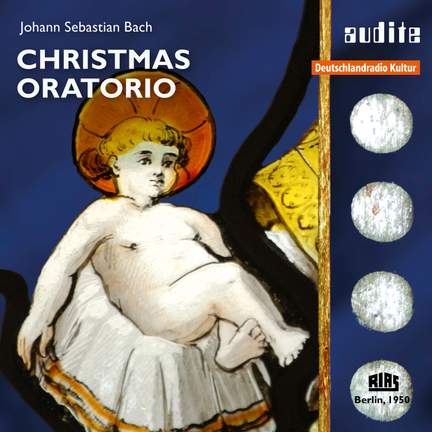
The dimensions of the RIAS Chamber Choir and the RIAS Boys Choir are modest for their time but, while they are responsive to text and music, greater pleasure derives from the solo contributions...
Bach, J S: Christmas Oratorio, BWV248
Agnes Giebel (soprano / angel), Charlotte Wolf-Matthäus (alto), Helmut Krebs (tenor / evangelist) & Walter Hauck (baritone / Herodes)
RIAS-Kammerchor, RIAS-Knabenchor & RIAS-Kammerorchester, Karl Ristenpart
Purchase product

The dimensions of the RIAS Chamber Choir and the RIAS Boys Choir are modest for their time but, while they are responsive to text and music, greater pleasure derives from the solo contributions...
About
Following the Bach cantatas edition with Karl Ristenpart, Audite now continue their series of historic recordings from the archives of RIAS Berlin with a complete recording of the Christmas Oratorio. As soloists, Ristenpart engaged leading Bach singers of the time, thus ensuring that the recitatives of the Evangelist, the arias and ensembles were of particularly high quality. Alongside the RIAS Chamber Choir and the RIAS Chamber Orchestra a recording was created in December 1950 which both validly represents Bach interpretation of that time, and also heralds, notably in Parts 4 and 5, historically informed performance practice.
Karl Ristenpart responded to the accession to power by the Nazis in 1933 by retreating to work with chamber ensembles: a sphere which was able mostly to escape the cultural-political interference by the state authority. The Nazi nomenklatura felt that Wagner was the bringer of a new era. Ristenpart countered with Bach: the 'Wagner Ring' vs. the 'Bach Ring': Wagner’s 'Ring' depicting the demise of Germanic gods and heroes; opposed by the Bach cantata cycle concerning the emergence of Christianity and its 'Saviour'.
After the war, Ristenpart championed a cultural ideal which turned away from the drive for monumentalism. In this, Bach served him as a catalyst for mental renewal and as a guide to retreat from the craze surrounding Wagner. Ristenpart’s decisions of the 1930s thus permeate his Bach interpretations in the cantatas (AUDITE21415) as well as the Christmas Oratorio of 1950.
Contents and tracklist
- Helmut Krebs, Charlotte Wolf-Matthäus, Walter Hauck
- RIAS Kammerchor, RIAS Kammerorchester, RIAS Knabenchor
- Karl Ristenpart
- Helmut Krebs, Agnes Giebel, Walter Hauck, Charlotte Wolf-Matthäus
- RIAS Kammerorchester, RIAS Kammerchor
- Karl Ristenpart
- Helmut Krebs, Walter Hauck, Agnes Giebel, Charlotte Wolf-Matthäus
- RIAS Kammerchor, RIAS Kammerorchester
- Karl Ristenpart
- Helmut Krebs, Agnes Giebel, Walter Hauck
- RIAS Kammerchor, RIAS Kammerorchester
- Karl Ristenpart
- Charlotte Wolf-Matthäus, Helmut Krebs, Walter Hauck, Agnes Giebel
- RIAS Kammerchor, RIAS Kammerorchester
- Karl Ristenpart
- Helmut Krebs, Walter Hauck, Agnes Giebel
- RIAS Kammerchor, RIAS Kammerorchester
- Karl Ristenpart
Awards and reviews
 Christmas Issue 2013
The dimensions of the RIAS Chamber Choir and the RIAS Boys Choir are modest for their time but, while they are responsive to text and music, greater pleasure derives from the solo contributions of Charlotte Wolf-Matthaus and Helmut Krebs. The most admire Evangelist of his generation, Kreb’s singing is clearly articulated, lyrical and authoritative.
 December 2013
Ristenpart’s recording is an important testament to the complexity of interpretative currents in Bach performance.
 27th November 2013
Ristenpart was a remarkable Bach conductor, truly years ahead of his time. This recording of the Christmas Oratorio, set down over a mere two days, is not flawless - not least because performing standards have risen so much during the last sixty years. However, it’s stylish, wise and very well worthwhile hearing.