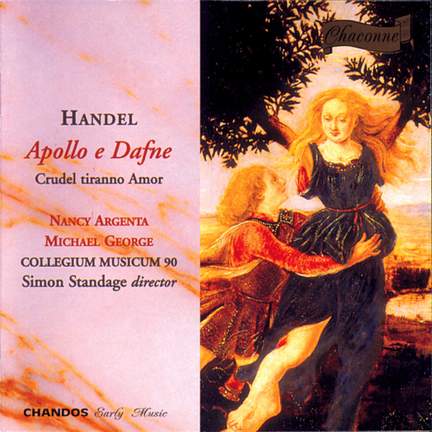
Special offer. Handel: Apollo e Dafne & Crudel tiranno Amor
Nancy Argenta (soprano), Michael George (bass)
Collegium Musicum 90, Simon Standage
Handel's Apollo e Dafne is a difficult work to put in context. Completed in Hanover in 1710 but possibly begun in Italy, its purpose isn't clear, while, as secular cantatas go, it's long (40...
Special offer. Handel: Apollo e Dafne & Crudel tiranno Amor
Nancy Argenta (soprano), Michael George (bass)
Collegium Musicum 90, Simon Standage
Purchase product

We pay more royalties to artists and composers than any other streaming service with our innovative Fair Play pay-per-second model
We pay artists and composers fairly with our pay-per-second model
Handel's Apollo e Dafne is a difficult work to put in context. Completed in Hanover in 1710 but possibly begun in Italy, its purpose isn't clear, while, as secular cantatas go, it's long (40...
About
Contents and tracklist
IV. Aria. Spezza l'arco e getta l'armi (Break your bow and throw away your arrows) (Apollo)
Track length3:10
VII. Aria. Ardi, adori, e preghi in vano (You desire, adore and beseech in vain) (Dafne)
Track length3:22
XV. Duet. Deh! lascia addolcire quell'aspro rigor (Pray! Soften your unbending severity) (Apollo, Dafne)
Track length2:29
Awards and reviews
 2010
2010
Handel's Apollo e Dafne is a difficult work to put in context. Completed in Hanover in 1710 but possibly begun in Italy, its purpose isn't clear, while, as secular cantatas go, it's long (40 minutes) and ambitiously scored for two soloists and an orchestra of strings, oboes, flute, bassoon and continuo. But this isn't just a chunk of operatic experimentation: it sets its own, faster pace than the leisurely unfolding of a full-length Baroque stage-work, yet its simple Ovidian episode, in which Apollo's pursuit of the nymph Dafne results in her transformation into a tree, is drawn with all the subtlety and skill of the instinctive dramatic genius that Handel was.
This recording features the expert Handelian voices of Nancy Argenta and Michael George, and both convey their roles convincingly. Argenta's hard, clear tone seems just the thing for the nymph, who isn't required to be especially alluring but who does have to sound quick to anger and (literally) untouchable; and George strikes the right note as Apollo, bragging loudly at the opening of his superior skill in archery to Cupid before succumbing more gently, and in the end extremely touchingly, to Cupid's arts. The orchestra is bright and efficient, and the pacing of the work seems just right. This is superb Handel then, and, as if that were not enough, there's a bonus in the form of a shorter cantata for soprano and strings, Crudel tiranno amor. It's a beautiful piece indeed, and Argenta performs it perfectly.