Rutter: Requiem and other choral works
with ROSA MANNION soprano
Polyphony, Bournemouth Sinfonietta, Stephen Layton
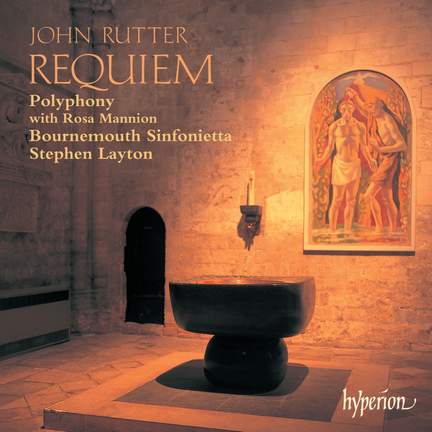
Here is music finely crafted, written with love for the art and an especial care for choral sound.
It's melodious without being commonplace, harmonically rich without being sticky, modern in...
Rutter: Requiem and other choral works
with ROSA MANNION soprano
Polyphony, Bournemouth Sinfonietta, Stephen Layton
Purchase product

Here is music finely crafted, written with love for the art and an especial care for choral sound.
It's melodious without being commonplace, harmonically rich without being sticky, modern in...
About
John Rutter composed his Requiem in 1985. The work follows the precedents of Brahms and Faure in using carefully selected texts in place of much of the standard Missa Pro defunctis sequence. The resulting composition has an arch-like formal structure within which is contained some of Rutter's most haunting (and, in the case of The Lord is my shepherd, well known) choral music to date. Also included are two items from the Birthday Madrigals collection composed in honour of the jazz pianist George Shearing, and eight further sacred works. The double-choir Hymn to the Creator of Light is a wonderful composition, far removed from the romantic style with which Rutter has sometimes been associated; the work here receives its first recording. The Lord bless you and keep you makes a most felicitous ending to the programmeone of those tunes that just will not leave your head.
Contents and tracklist
Awards and reviews
 2010
2010
Here is music finely crafted, written with love for the art and an especial care for choral sound.
It's melodious without being commonplace, harmonically rich without being sticky, modern in the graceful way of a child who grows up responsive to newness but not wanting to kick his elders in the teeth. He gives us the heart's desire. But he's on too familiar terms with our heart's desires, he doesn't extend them, or surprise us into realising that they were deeper and subtler than we thought. This is by way of cautiously savouring a remembered taste, which could readily be indulged without perceived need for an interval: one item leads to another and before we know it the pleasurable hour is over. The Requiem is the longest work; the other pieces vary from two to just over six minutes.
Most are unaccompanied and show the choir of 25 voices as another of those expert groups of assured and gifted professionals that are among the principal adornments of modern musical life. Their capacity as a virtuoso choir is tested in the Cantate Domino and Choral Fanfare, but Rutter writes for real singers (not just singer-musicians) and their tone is unfailingly beautiful. The two soloists are excellent.