Berlioz: Overtures
Staatskapelle Dresden, Sir Colin Davis
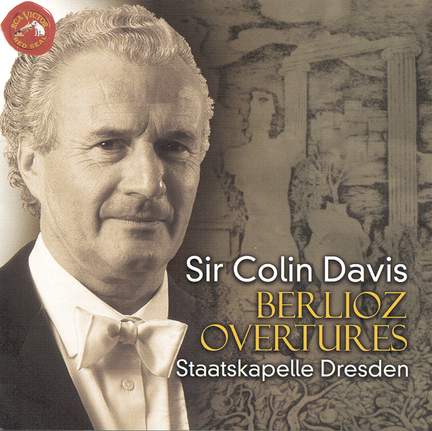
Berlioz's seven overtures fit comfortably into an hour and a quarter, in performances that reflect Sir Colin's long absorption with music that remains difficult, original, surprising. The most...
Berlioz: Overtures
Staatskapelle Dresden, Sir Colin Davis
Purchase product

We pay more royalties to artists and composers than any other streaming service with our innovative Fair Play pay-per-second model
We pay artists and composers fairly with our pay-per-second model
Berlioz's seven overtures fit comfortably into an hour and a quarter, in performances that reflect Sir Colin's long absorption with music that remains difficult, original, surprising. The most...
About
Contents and tracklist
- Dresdner Staatskapelle
- Orchester der Staatsoperette Dresden
- Sir Colin Davis
Les Franc-Juges, Op. 3
Track length12:26
This track is only available as an album download.
Waverley, Op. 1
Track length10:24
This track is only available as an album download.
King Lear, Op. 4
Track length15:57
This track is only available as an album download.
Benvenuto Cellini, Op. 23
Track length10:06
This track is only available as an album download.
Awards and reviews
 2010
2010
Berlioz's seven overtures fit comfortably into an hour and a quarter, in performances that reflect Sir Colin's long absorption with music that remains difficult, original, surprising. The most extrovert, the Ball Scene in Le carnaval romain, is exhilaratingly played, but done so without the strenuous attempts after excitement at all costs, through speed and volume, which are all too familiar. The music is more interesting than that, its tensions more dramatic. What are perhaps the two hardest overtures to play successfully, Waverley and King Lear, benefit from some understatement, especially in the quieter sections when, particularly in Lear, a sense of trouble animates the music. As elsewhere, Berlioz's melodies made out of awkward rhythms and uneven metres call for a skilled hand: nowhere is this more evident than at the opening of BenvenutoCellini, whose oddity doesn't immediately strike the listener but whose 'rightness' is proved by its wonderful verve. Davis handles this superbly, as in different vein he does the soft music answering the opening of Le carnavalromain, in which he's given some beautiful playing (especially from the cor anglais) by the Dresden orchestra. It responds to his understanding of the different levels of tension and expression, as well as different dynamic levels, at which Berlioz can make his effects, such as at the start of Les francs-juges. Sometimes a slight emphasis in the accompaniment, even the touch of warmth on a single note, can illuminate much in the melody. It's all beautifully done.