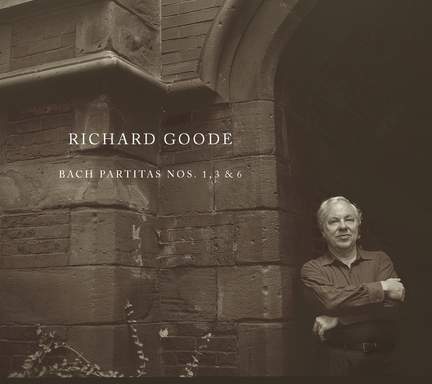
JS Bach: Partitas Nos. 1, 3 and 6
Richard Goode (piano)
Awards:
-
Gramophone Magazine, July 2003, Disc of the Month

In this second volume of Richard Goode's complete set of Bach Partitas there's the sense of a distinguished lineage, a tradition of Bach piano playing with a Classical-Romantic bent that reaches...
JS Bach: Partitas Nos. 1, 3 and 6
Richard Goode (piano)
Purchase product

We pay more royalties to artists and composers than any other streaming service with our innovative Fair Play pay-per-second model
We pay artists and composers fairly with our pay-per-second model
Awards:
-
Gramophone Magazine, July 2003, Disc of the Month
In this second volume of Richard Goode's complete set of Bach Partitas there's the sense of a distinguished lineage, a tradition of Bach piano playing with a Classical-Romantic bent that reaches...
About
Contents and tracklist
Awards and reviews
-
Gramophone MagazineJuly 2003Disc of the Month
 2010
2010
In this second volume of Richard Goode's complete set of Bach Partitas there's the sense of a distinguished lineage, a tradition of Bach piano playing with a Classical-Romantic bent that reaches back to Harold Samuel via Borowsky, Horszowski, Schnabel and Serkin. Like them (though not specifically in the Partitas) Goode treats line as paramount, stressing counterpoint only where and when it serves an expressive end, as in the First Partita's Allemande. Like Schnabel, Goode can occasionally accelerate a phrase to focus its place in the larger context. The use of crescendo is subtle yet telling (the Corrente) and the way phrases breathe, suggests hours spent focusing on a precise rubato.
This is glorious music, and there's barely a second when you aren't aware of that. Everything flows from the logic of the line, and when perspectives do change (at around 46 seconds into the A minor Partita's opening two-part Fantasia, for example, where the lower voice takes the lead) the option seems inevitable.
Everything essential to the spirit is here: dance and reverie, clarity and form, digital brilliance.
Goode never forces his tone and although he has a secure sense of rhythm – the faster dances trip along rather than rush – there's no hint of the obsessive drive indulged by the post-Gould school. That, too, can be exciting, but Goode's inner explorations of Bach will probably yield longer-term satisfaction. This is an exceptionally fine set.