Eric Baumgartner is a well-known figure in piano pedagogy and has worked closely with publishers Willis Music and Hal Leonard over the years as a composer and arranger. Their collaboration has culminated in an array of fun and educational publications for solo piano, and his expertise in jazz and pop music particularly shines through in his writing.
After his recent success at the Art of Piano Education Awards, Eric kindly took the time to answer my questions about the award-winning publication Favorite Melodies for Jazz Piano Solo, discuss his Jazz Piano Basics series, and offer advice for aspiring musicians. You can read the full interview below.
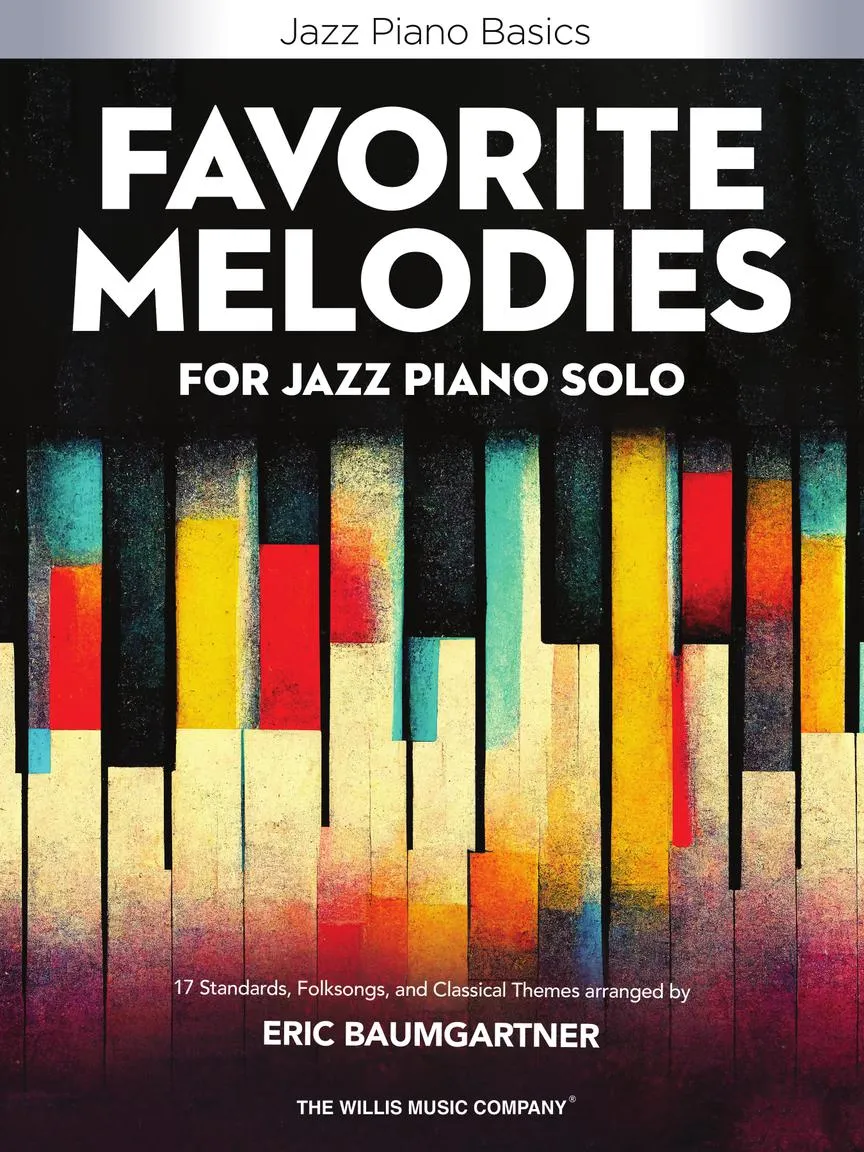
Congratulations on Favorite Melodies for Jazz Piano Solo being awarded the Founder’s Award at the Art of Piano Education Awards in London last month! Can you tell us a bit about the publication and what is included?
Can you explain the differences between your other series, including Jazzabilities and Jazz It Up! ?
I've created various jazz methods, solos and collections over the years under various names, such as the two you cited. It was getting a bit unwieldy, so we decided to tidy things up by putting everything under the same umbrella name, Jazz Piano Basics. The previous titles are being phased out as we release new (and often expanded) editions. At the core of Jazz Piano Basics is a two-volume method designed to be an accessible (and non-intimidating!) entry into the world of jazz. It contains short rhythmic and melodic reading exercise, performance pieces and a fun improv and ear-training games, all complete with downloadable audio accompaniments. Theory is introduced gradually and only after the player has had sufficient time to absorb the new sounds and to get the patterns comfortably into their fingers.
In addition to the method, the Jazz Piano Basics family also includes supplementary collections full of performance solos for a variety of levels. These include collections of my original compositions (Encore) as well as those featuring arrangements of popular tunes (such as the aforementioned Favorite Melodies for Jazz Piano Solo).
You’ve also worked with Willis Music on the Teaching Little Fingers to Play series. How do you adjust your writing to suit ‘little fingers’?
I do find writing for beginners quite challenging! It's important not to have too many shifts for the hands. Most of my work for beginners has been to arrange familiar melodies (Disney, pop and folk tunes, etc.). Often, the rhythms need to be simplified, with less syncopation, as well as the occasional melodic tweak to minimize challenging shifts. I don't profess to be too adept at this! I'm often asked to simplify elements (sometimes more than once) before my editor deems it acceptable. It is a fun challenge, though. And I can always add more pizazz through the teacher duet parts, which are often part of the collections.
You have worked on many educational piano publications: what were the most important lessons you learned during your own musical education?
I was also lucky to have parents and teachers who would encourage my musical pursuits outside of my lesson material. If I hadn't fallen in love with pop music growing up, and had a curiosity to pursue it on the piano, I think I eventually would have grown too frustrated with my classical lessons and given them up. But they were supportive, so I started to play in bands and eventually realized that music is music, regardless of style. The Beatles and Beethoven are both part of the storied history of Western tonality and harmony. I found that each of my two pursuits (classical and pop) only helped strengthen the other. Then later on, they were joined by a third pursuit in jazz. And I've not stopped branching out. The point being, whatever sparks a student's interest is valid. If it keeps them involved and motivated, encourage it. Most likely, they will continue to be curious to find new sounds that move them, ever expanding their musical horizons.
Who were your biggest influences and inspirations growing up, and why?
Elton John, The Beatles, Thelonious Monk, Chick Corea, Stevie Wonder, Prokofiev, Beethoven, XTC, Queen, Yes, Genesis, Bill Evans, Herbie Hancock, Elvis Costello, George Gershwin, Charles Mingus and dozens and dozens more. Why? Because what they produced was nothing short of magic.
What music would you recommend to people who particularly enjoy your publications and want to explore this style/genre further (either printed music or music to listen to)?

Before I entered the world of publishing, I was fond of the arrangements of Lee Evans [pictured] and would often use his collections with my more advanced students. I've no doubt that his arrangements influenced my own arranging style. I think today, however, we're in a bit of a golden age for jazzy-tinged arrangements. There's no shortage of gifted arrangers releasing delightful collections. (I'm a bit hesitant to list any as I know I'll forget to mention other worthy individuals!). Such is the quality of talent out there that selecting a collection based on the titles and level will more than likely yield a winner.
What advice would you give someone wanting to start improvising (or more generally, learning jazz) who doesn’t know where to start?
The short answer is to listen, listen, listen. The history of jazz goes back well over one hundred years. The variety is staggering, but I truly believe within the world of jazz there is something for everyone. Try various streaming services. Make note of the artists and the eras that intrigue you and seek out more of the same. I might suggest first focusing on material from 1957-64 or so. That was a particularly rich era for classic albums by classic artists. There is no shortage of accessible, melodic and joyful material from that period.
I would then humbly offer up my own Jazz Piano Basics method. Improvisation is introduced through short, fun ear training games (best realized with the downloadable audio accompaniments). Rhythmic syncopation and swing, bluesy scales and rich chordal harmonies are also introduced and developed throughout, always striving to provide a gentle bridge from the world of classical by emphasizing the common bonds between the styles.
What has been the highlight of your musical career?
I truly find that hard to answer! I've been so lucky to work full-time in music my entire adult life. I've had so many rewarding experiences working with so many brilliant musicians and in such a wide variety of settings - as composer, musical director, conductor, arranger, clinician, teacher, studio musician, member of touring bands, etc, etc. To this day, I feel so fortunate to have more work than I can handle, most often with musicians who have become dear friends.
What is next for you?
Much more of the same, I hope!
Publications mentioned in this interview

Favorite Melodies for Jazz Piano Solo
Willis Music | Piano
Seventeen masterful arrangements for ANY performance setting: recital hall, virtual site, or intimate living space! The pieces also perfectly complement Eric Baumgartner's Jazz Piano Basics method.
Sheet Music

Eric Baumgartner: Jazz Piano Basics - Book 1
Willis Music | Piano
The fundamentals of jazz presented in a logical and accessible manner, primarily through short, progressive exercises. Ideal for traditional lessons, as well as for anyone wishing to expand their jazz abilities.
Sheet Music & Audio

Jazz Piano Basics - Book 2
Willis Music | Piano
Book 2 explores concepts in greater depth and introduces the most important aspects of jazz theory in a style that's easy to grasp.
Sheet Music

Jazz Piano Basics - Encore
Willis Music | Piano
Seventeen great pieces written to help a student become familiar with various jazz styles. They progress from later elementary to mid-intermediate level and may be used with the Jazz Piano Basics series or as independent solo recital pieces! Several of the pieces were previously in the Jazz Connection series.
Sheet Music