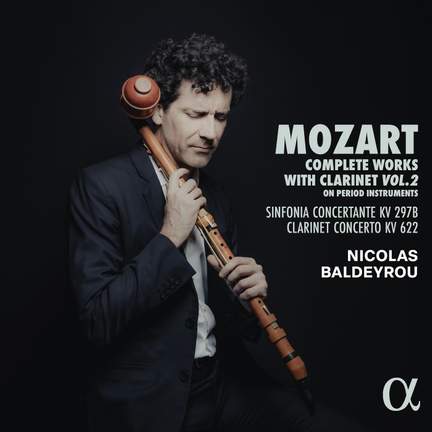
Special offer. Mozart: Complete Works For Clarinet, Vol. 2
Nicolas Baldeyrou (clarinet), Gabriel Pidoux, David Guerrier, David Douçot, Kölner Akademie (chamber ensemble), Michael Alexander Willens
Baldeyrou's recording shines a spotlight on this genre which despite flourishing between 1770 and 1830, particularly in Paris, is now sadly neglected on the concert platform and in the recording...
Special offer. Mozart: Complete Works For Clarinet, Vol. 2
Nicolas Baldeyrou (clarinet), Gabriel Pidoux, David Guerrier, David Douçot, Kölner Akademie (chamber ensemble), Michael Alexander Willens
Purchase product

Baldeyrou's recording shines a spotlight on this genre which despite flourishing between 1770 and 1830, particularly in Paris, is now sadly neglected on the concert platform and in the recording...
About
After exploring the Gran Partita, Nicolas Baldeyrou opens the doors to concertante music in this second volume. The programme displays the two faces of Mozart: the youthful, all-conquering genius of his Parisian period, and the supreme master of his final year in Vienna – the two phases united by his overriding desire to make the instrument ‘sing’.
‘Performing these major works on historical instruments is not a nostalgic exercise, but an attempt to recover the music’s acoustic authenticity,’ says Baldeyrou. For the Concerto, the use of a copy of the period basset clarinet is essential in order to recreate the melodic line, tessitura and colours demanded by Mozart. Where the modern clarinet ‘homogenises’ the sound, the historical basset clarinet offers an infinite palette.
With the Kölner Akademie and leading soloists, Baldeyrou plays with the intrinsic vulnerability of the instrument and sculpts each note, bringing us as close as possible to the composer's last creative impulse.
Contents and tracklist
- Nicolas Baldeyrou, Gabriel Pidoux, David Guerrier, David Douçot
- Kölner Akademie
- Michael Alexander Willens
Awards and reviews
 May 2026
Baldeyrou's recording shines a spotlight on this genre which despite flourishing between 1770 and 1830, particularly in Paris, is now sadly neglected on the concert platform and in the recording studio.