Bach: Die Kunst der Fuge
Aapo Häkkinen (early keyboard instruments)
His expressive use of rhythmic nuance and persuasive phrasing, aided by the judicious spreading of chords, results in an approach that is consistently illuminating while avoiding any hint of...
Bach: Die Kunst der Fuge
Aapo Häkkinen (early keyboard instruments)
Purchase product

His expressive use of rhythmic nuance and persuasive phrasing, aided by the judicious spreading of chords, results in an approach that is consistently illuminating while avoiding any hint of...
About
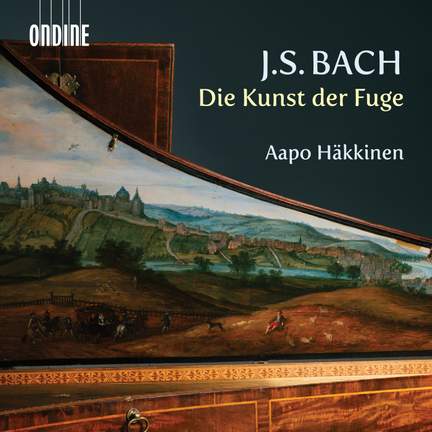
“[Bach] speaks to us in his work in such clear terms that we may quite well call these fugues poems. (…) These have warmth, quiet joy, love. And running through all the poems, dressed in different guises, is the main theme, creating order, binding the work as a whole together: it is a safe bond in all its diversity. Over all lies the proximity of death.” (Enzio Forsblom). In this new recording, Bach’s final magnum opus is played by Aapo Häkkinen on a harpsichord built in 1614 by Andreas Ruckers the Elder (1579–?1652) and which belonged to the composer John Blow (1649–1708), organist of Westminster Abbey and former teacher of Henry Purcell. A tradition exists that G.F. Handel had also played this harpsichord.
Contents and tracklist
Awards and reviews
 July 2024
His expressive use of rhythmic nuance and persuasive phrasing, aided by the judicious spreading of chords, results in an approach that is consistently illuminating while avoiding any hint of dry academicism...While not the final word on this extraordinary work, this engaging performance communicates a huge amount of enjoyment while respecting the rigorous integrity of Bach’s masterpiece.
 July 2024
Even the most chromatically complex of the fugues is rendered with ease, poise and sensitivity. The Ruckers instrument is an ideal choice, mellow but full of colour and warmth. The result is a harpsichord rendering that feels monumental without ever becoming severe or monochromatic.