Ernst, Paganini & Others: Works for Violin
Edson Scheid
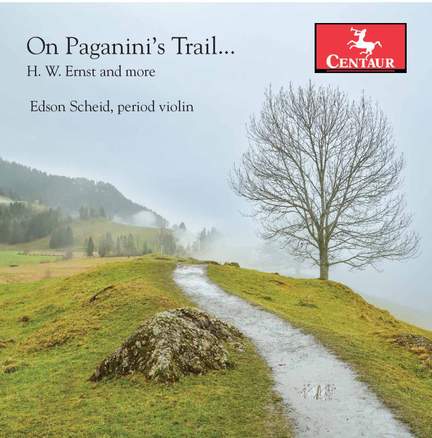
This is great playing, a total recreation of a piece that might as well have sunk under the ocean. Also on the CD, Scheid plays more Paganini with the aptitude and stylistic aplomb he displays...
Ernst, Paganini & Others: Works for Violin
Edson Scheid
Purchase product

This is great playing, a total recreation of a piece that might as well have sunk under the ocean. Also on the CD, Scheid plays more Paganini with the aptitude and stylistic aplomb he displays...
About
During the mid-19th Century there was a debate as to who would in effect be the next Paganini. This album includes works by some of the major contenders, as well as Edson Scheid's own arrangement of Mozart's Rondo from Duo in G Major for violin and viola, KV 423. Edson Scheid has been praised for his “polished playing” (The Strad), for being “more than equipped to deal with the virtuosic challenges” (Seen and Heard International), for being "clearly gifted" (The New York Times), and "both musically and technically one of the most assured and accomplished of today’s younger period violinists" (The Boston Musical Intelligencer). His performance of Strauss’s song Morgen at Carnegie Hall alongside Joyce DiDonato and Il Pomo d'Oro was described as follows: “The concertmaster, Edson Scheid, proved a worthy foil as violin soloist” (The New York Times). A native of Brazil, Edson Scheid is based in New York City and frequently performs with such ensembles as Les Arts Florissants (France), Il Pomo d'Oro (Italy), the Trinity Baroque Orchestra, Juilliard415, NOVUS NY, New York Baroque Incorporated, the Aston Magna Music Festival, the Clarion Orchestra, and the American Baroque Orchestra, an ensemble for which he serves as concertmaster.
Contents and tracklist
- Edson Scheid
- Edson Scheid
- Edson Scheid
Awards and reviews
 January/February 2020
This is great playing, a total recreation of a piece that might as well have sunk under the ocean. Also on the CD, Scheid plays more Paganini with the aptitude and stylistic aplomb he displays in the caprices. Scheid also has arranged part of a Mozart duo for violin and viola as a solo violin endeavor. I miss the varied personalities of two players together, but Scheid’s transcription is a thoughtful and virtuosic experiment in stretching the limits of the solo period violin.