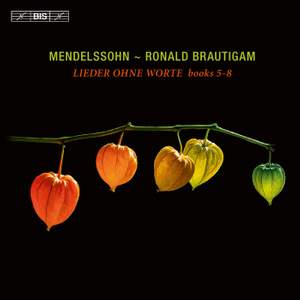


Mendelssohn – Lieder ohne Worte, Books 5 – 8
Ronald Brautigam (piano)
The variety of tangy colours he conjures from the instrument really is the aural equivalent of removing a century of dirt from an oil painting…if, like me, you have an irrational aversion to... — More…
Downloads
What are FLAC and MP3?Contents
Mendelssohn: Songs without Words, Book 5 (6), Op. 62
- Ronald Brautigam
- Recorded: August 2014
- Recording Venue: Österåker Church, Sweden
No. 1. Andante espressivo, MWV U185
No. 2. Allegro con fuoco, MWV U181
No. 3. Andante maestoso, MWV U177, "Trauermarsch"
No. 4. Allegro con anima, MWV U175
No. 5. Andante con moto, MWV U151, "Venezianisches Gondellied"
No. 6. Allegretto grazioso, MWV U161, "Fruhlingslied"
Mendelssohn: Songs without Words, Book 6 (6), Op. 67
- Ronald Brautigam
- Recorded: August 2014
- Recording Venue: Österåker Church, Sweden
No. 1. Andante, MWV U180
No. 2. Allegro leggiero, MWV U145
No. 3. Andante tranquillo, MWV U102
No. 4. Presto, MWV U182, "Spinnerlied"
No. 5. Moderato, MWV U184
No. 6. Allegretto non troppo, MWV U188
Mendelssohn: Songs without Words, Book 7 (6), Op. 85
- Ronald Brautigam
- Recorded: August 2014
- Recording Venue: Österåker Church, Sweden
No. 1. Andante espressivo, MWV U189
No. 2. Allegro agitato, MWV U101
No. 3. Presto, MWV U111
No. 4. Andante sostenuto, MWV U190
No. 5. Allegretto, MWV U191
No. 6. Allegretto con moto, MWV U155
Mendelssohn: Songs without Words, Book 8 (6), Op. 102
- Ronald Brautigam
- Recorded: August 2014
- Recording Venue: Österåker Church, Sweden
No. 1. Andante un poco agitato, MWV U162
No. 2. Adagio, MWV U192
No. 3. Presto, MWV U195, "Kinderstuck"
No. 4. Andante, un poco agitato, MWV U152
No. 5. Allegro vivace, MWV U194, "Kinderstuck"
No. 6. Andante, MWV U172
Mendelssohn: Gondellied (Barcarolle) in A
- Ronald Brautigam
- Recorded: August 2014
- Recording Venue: Österåker Church, Sweden
Mendelssohn: Lied ohne Worte (Song without Words) in F Major, MWV U150
- Ronald Brautigam
- Recorded: August 2014
- Recording Venue: Österåker Church, Sweden
Mendelssohn: Lied ohne Worte (Song without Words) in D Major, MWV U178
- Ronald Brautigam
- Recorded: August 2014
- Recording Venue: Österåker Church, Sweden
Mendelssohn: Lied ohne Worte (Song without Words) in D Minor, MWV U187, "Reiterlied" (Horseman's Song)
- Ronald Brautigam
- Recorded: August 2014
- Recording Venue: Österåker Church, Sweden
Lied ohne Worte (Song without Words) in D Minor, MWV U187, "Reiterlied"
Mendelssohn: Lied ohne Worte (Song without Words) in E-Flat Major, MWV U82 (completed by R.L. Todd)
- Ronald Brautigam
- Recorded: August 2014
- Recording Venue: Österåker Church, Sweden
Mendelssohn: Kinderstücke (6), Op. 72 'Christmas Pieces'
- Ronald Brautigam
- Recorded: August 2014
- Recording Venue: Österåker Church, Sweden
No. 1 in G Major: Allegro non troppo, MWV U171
No. 2 in E-Flat Major: Andante sostenuto, MWV U170
No. 3 in G Major: Allegretto, MWV U164
No. 4 in D Major: Andante con moto, MWV U169
No. 5 in G Minor: Allegro assai, MWV U166
No. 6 in F Major: Vivace, MWV U168
Mendelssohn: Andante in E-Flat Major, MWV U165
- Ronald Brautigam
- Recorded: August 2014
- Recording Venue: Österåker Church, Sweden
Mendelssohn: Sostenuto in F major, MWV U167
- Ronald Brautigam
- Recorded: August 2014
- Recording Venue: Österåker Church, Sweden