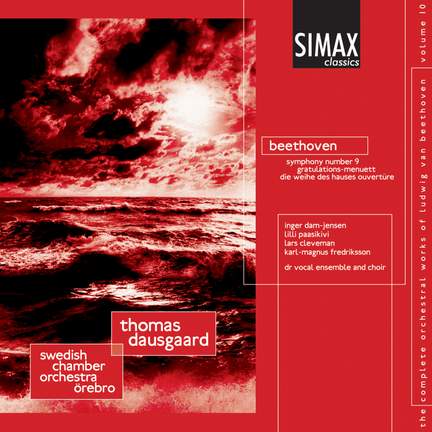
Beethoven - Complete Orchestral Works Volume 10
Inger Dam-Jensen (soprano), Lilli Paasikivi (mezzo), Lars Cleveman (tenor) & Karl-Magnus Fredriksson (baritone)
Swedish Chamber Orchestra Örebro, Denmark Radio Choir, Thomas Dausgaard
…a swift, unmannered, clear-textured presentation in which the recorded balance reveals all, the playing style eschews old-world vibrato and, come the closing Presto, the release of tension...
Beethoven - Complete Orchestral Works Volume 10
Inger Dam-Jensen (soprano), Lilli Paasikivi (mezzo), Lars Cleveman (tenor) & Karl-Magnus Fredriksson (baritone)
Swedish Chamber Orchestra Örebro, Denmark Radio Choir, Thomas Dausgaard
Purchase product

…a swift, unmannered, clear-textured presentation in which the recorded balance reveals all, the playing style eschews old-world vibrato and, come the closing Presto, the release of tension...
About
Thomas Dausgaard and the Swedish Chamber Orchestra, with Boris Berezovsky as soloist in the piano concertos, have received excellent reviews and several awards for their series of the complete orchestral music of Beethoven.
They are joined on this the latest recording in the cycle by leading vocal soloists from Sweden and Denmark – among them Inger Dam-Jensen – and the DR Vocal Ensemble and Choir.
All three of the orchestral works on this disc were composed in the early 1820s. Two of them represent Beethoven’s final efforts in this area, the Symphony No. 9 in D minor, and the Overture: The Consecration of the House. The Gratulations-Menuett was originally sketched as a movement intended for the projected Tenth Symphony before Beethoven decided to use it instead as a tribute to his impresario Hensler. The Ninth was Beethoven’s first symphony for more than a decade, and the originality of his conception of a Choral finale incorporating the text of Schiller’s “Ode to Joy” scarcely needs stressing, nor does the impact of the work on later composers.
Contents and tracklist
Awards and reviews
 October 2009
…a swift, unmannered, clear-textured presentation in which the recorded balance reveals all, the playing style eschews old-world vibrato and, come the closing Presto, the release of tension seems to justify all that has gone before.