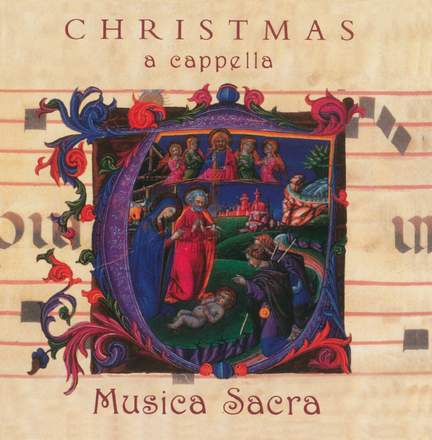
Christmas a cappella I
Musica Sacra, Woo-sug Kang solo quartet, Indra Hughes
all concerned cope very well with the wide variety of material on offer, from the traditional via the renaissance and baroque to the comparatively modern.
Christmas a cappella I
Musica Sacra, Woo-sug Kang solo quartet, Indra Hughes
Purchase product

all concerned cope very well with the wide variety of material on offer, from the traditional via the renaissance and baroque to the comparatively modern.
About
Outstanding first release by a major new force in New Zealand choral music, Musica Sacra, led by Musical Director Indra Hughes.
Indra Hughes is widely recognized as one of New Zealand's most versatile and respected musicians. He came to Auckland in 1995 after his early training at the Cathedral in Blackburn, Lancashire and at Oriel College, Oxford, where he was Organ Scholar and also took a degree in Law, to take up the position of Organist and Director of Music at Auckland Cathedral. A Fellow of the Royal College of Organists, he holds the Gerald Knight Memorial Prize for the highest marks in the R.C.O. Choir Training Diploma Examinations. He has twice directed the music for Her Majesty the Queen, first in Oxford and then in 1995 at the great service of thanksgiving marking the opening of the completed cathedral in Auckland.
Contents and tracklist
- Musica Sacra
- Indra Hughes
- Musica Sacra
- Indra Hughes
- Musica Sacra
- Indra Hughes
- Musica Sacra
- Indra Hughes
- Musica Sacra
- Indra Hughes
- Rachel Iliffe
- Musica Sacra
- Indra Hughes
- Musica Sacra
- Indra Hughes
- Musica Sacra
- Indra Hughes
- Musica Sacra
- Indra Hughes
- Musica Sacra
- Indra Hughes
- Musica Sacra
- Indra Hughes
- Jack Bourke
- Musica Sacra
- Indra Hughes
Spotlight on this release
-
An error occurred.
Try watching this video on www.youtube.com, or enable JavaScript if it is disabled in your browser.
Awards and reviews
 4th December 2014
all concerned cope very well with the wide variety of material on offer, from the traditional via the renaissance and baroque to the comparatively modern.