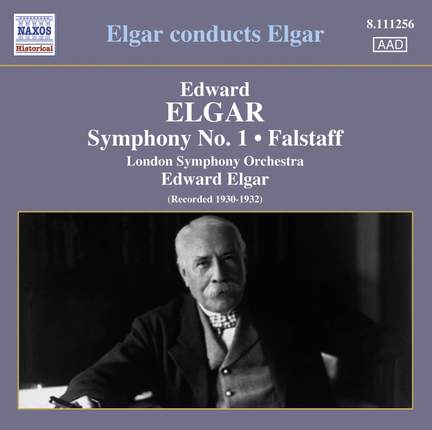
Elgar conducts Elgar
London Symphony Orchestra, Edward Elgar
Awards:
-
Presto Recording of the Week, 16th February 2009

-
Building a Library, October 2016, Historic Choice

The LSO plays out of its skin for the composer; Falstaff is brilliantly characterised, the Symphony has serious intensity. Fair sound for the vintage, with some harshness in the Symphony.
Elgar conducts Elgar
London Symphony Orchestra, Edward Elgar
Purchase product
Awards:
-
Presto Recording of the Week, 16th February 2009
-
Building a Library, October 2016, Historic Choice
The LSO plays out of its skin for the composer; Falstaff is brilliantly characterised, the Symphony has serious intensity. Fair sound for the vintage, with some harshness in the Symphony.
About
Before its sensational première in 1908, Hans Richter, the work’s dedicatee and first conductor, acclaimed Elgar’s Symphony No. 1 as ‘the greatest symphony of modern times’.
Although Falstaff is often treated merely comically, Elgar’s virtuosic tone poem presents him and Prince Hal with a psychological insight truly worthy of Shakespeare.
On these historic and thrillingly realized recordings, made between 1930 and 1932, there really is no match for the composer’s insight and instinctive way with his own works, especially when conducting the London Symphony Orchestra, of which he had been principal conductor from 1911 to 1913.
“Elgar’s recordings of his own music have come to be regarded as one of the great achievements of gramophone history.” MusicWeb International
Contents and tracklist
Awards and reviews
-
Presto Recording of the Week16th February 2009
 June 2009
The LSO plays out of its skin for the composer; Falstaff is brilliantly characterised, the Symphony has serious intensity. Fair sound for the vintage, with some harshness in the Symphony.
 15th February 2009
It’s a joy to be reintroduced to these wonderful performances — with the Violin Concerto, the summits of Elgar’s recordings of his own music. We have been living in an age of outstanding Elgar conductors — Davis (Colin and Andrew), Elder, Barenboim, Hickox, Vernon Handley, Andrew Litton, Adrian Brown — but none of them surpasses, or even quite matches, the best of the composer’s interpretations. The strong, purposeful tread of the symphony’s opening, straightforward and sublime, the subtlety of the movement’s close, the scherzo’s sheer electricity, the adagio’s astonishing fluidity (scarcely two bars are the same length) and its almost unbearable expressive intensity: these are landmarks in an Elgarian’s experience. As for the captivating Falstaff, recorded two years later, in 1932, it is hard to imagine a more brilliantly convincing reading.