

Sheet Music Downloads: Delivery is currently taking longer than usual. We’re working to restore instant access as soon as possible. Audio downloads are processing as normal.
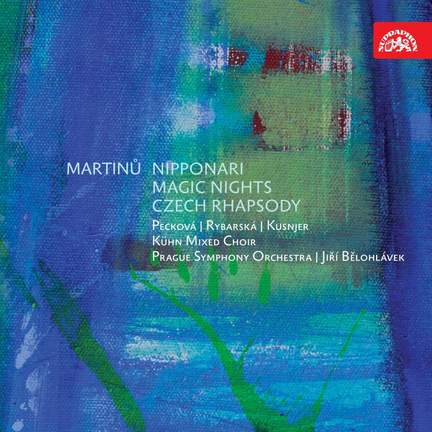
Martinu: Nipponari, Magic Nights & Czech Rhapsody
Recorded 1985-88
Dagmar Pecková (soprano), Lubica Rybarská (soprano) & Ivan Kusnjer (baritone)
Kühn Mixed Choir & Prague Symphony Orchestra, Jirí Belohlávek
Awards:
-
Gramophone Magazine, March 2009, Editor's Choice

Notwithstanding the unfamiliar repertoire, the sopranos Dagmar Pecková and Lubica Rybárska deliver superbly idiomatic renditions of the songs with Belohlávek shapes the cantata with persuasive...
Martinu: Nipponari, Magic Nights & Czech Rhapsody
Recorded 1985-88
Dagmar Pecková (soprano), Lubica Rybarská (soprano) & Ivan Kusnjer (baritone)
Kühn Mixed Choir & Prague Symphony Orchestra, Jirí Belohlávek
Purchase product

Awards:
-
Gramophone Magazine, March 2009, Editor's Choice
Notwithstanding the unfamiliar repertoire, the sopranos Dagmar Pecková and Lubica Rybárska deliver superbly idiomatic renditions of the songs with Belohlávek shapes the cantata with persuasive...
About
All three of these compositions open the imaginative world of the young Martinu to the listener, providing a glimpse into his early works for voice and orchestra.
Nipponari and Magic Nights were both inspired by exotic texts. The works of Japanese poets used in Nipponari are infused with a wistful, dreamy mood which is masterfully captured by Martinu’s unusual instrumentation and subtle compositional technique.
For his Impressionistic Magic Nights he instinctively chose texts about sorrow in a distant land far from home, unaware that this theme would play a fateful role in his own life. Mahler, incidentally, drew on the same collection of poems for his song cycle Das Lied von der Erde.
The general nationalistic fervor of 1918 and the thought of national independence are reflected in the Czech Rhapsody — released here for the first time on CD — particularly in his use of the Hymn “Saint Wenceslas” (patron saint of the Czech nation), and the premiere of this work was a tremendous success for Martinu.
It is difficult to imagine a more competent and sensitive interpretation of these works than you will find in these time-tested recordings by conductor Jirí Belohlávek and outstanding soloists.
Contents and tracklist
- Ľubica Rybárska (vocalist)
- Prague Symphony Orchestra
- Jiří Bělohlávek
- Ivan Kusnjer (vocalist)
- Prague Symphony Orchestra, Kühn Mixed Choir
- Jiří Bělohlávek, Pavel Kühn
Awards and reviews
-
Gramophone MagazineMarch 2009Editor's Choice
 February 2009
Notwithstanding the unfamiliar repertoire, the sopranos Dagmar Pecková and Lubica Rybárska deliver superbly idiomatic renditions of the songs with Belohlávek shapes the cantata with persuasive fervour. Although these performances were recorded over 20 years ago, the sound is remarkable for its clarity. A landmark issue for anyone interested in this endlessly fascinating composer.
 2010
With Martinu's mature and middle-period works staples of the repertoire, one forgets that he did not spring, fully formed, into the compositional world as a neoclassicist. Nipponari is a set of seven songs to Japanese poems for soprano and small orchestra written in 1912 when he was in his early twenties. Delightfully scored, there is nothing in its sound world of the later master who here provides a shimmering accompaniment to the wistful texts. In places there are resonances of Rimsky's Kitezh, too, and British ears may detect stylistic parallels with early Bax, or the Brian of In memoriam. Dagmar Pecková is a radiant soloist.
Magic Nights dates from six years later and uses Chinese texts from the same source as Das Liedvon der Erde to enchanting if less exalted effect.
There is a touch of Debussy in the orchestral sound, which requires a larger ensemble than Nipponari. L'ubica Rybárska yields nothing to Pecková in beauty of tone.
The major item here, however, is the cantata Czech Rhapsody from 1918 (not the violin and orchestra work of 1945), written just a few months before Magic Nights. It is a rare example of politically motivated music in Martinu's canon, imbued with patriotic feelings at impending independence, and was his first nationwide success. The grandiloquence of the opening section and close are beautifully caught by Belohlávek and the Pavel Kühn Cho- rale sings the polyglot text (including Psalm 23) with fervour. The Prague Symphony Orchestra accompanies splendidly throughout and the superb acoustic of the Dvorák Hall is captured superbly. The recordings may be 20 years old but they sound wonderful. Highly recommended.
 March 2009
The major item here, however, is the cantata Czech Rhapsody from 1918… The grandiloquence of the opening section and close are beautifully caught by B?lohlávek and the Pavel Kühn Chorale sings the polyglot text (including Psalm 23) with fervour. The Prague Symphony Orchestra accompanies splendidly throughout and the superb acoustic of the Dvo?ák Hall is captured superbly.
