Special offer. Tüür: Crystallisatio
Tallinn Chamber Orchestra, Estonian Philharmonic Chamber Choir, Tõnu Kaljuste
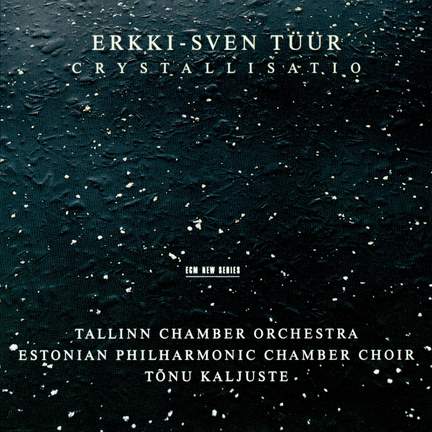
Architectonics VI (1992) sounds like one of those titles that are too good to resist, and it's to the credit of Erkki-Sven Tüür that he admits as much in the brief interview in the booklet to...
Special offer. Tüür: Crystallisatio
Tallinn Chamber Orchestra, Estonian Philharmonic Chamber Choir, Tõnu Kaljuste
Purchase product

We pay more royalties to artists and composers than any other streaming service with our innovative Fair Play pay-per-second model
We pay artists and composers fairly with our pay-per-second model
Architectonics VI (1992) sounds like one of those titles that are too good to resist, and it's to the credit of Erkki-Sven Tüür that he admits as much in the brief interview in the booklet to...
About
Contents and tracklist
- Peeter Malkov (flute), Monika Mattiesen (flute), Jüri Hargel (flute), Meelis Vind (clarinet), Madis Metsamart (vibraphone), Ulrika Kristian (violin), Maano Männi (violin), Ruth Haav (violin), Kaido Välja (violin), Sirje Salumets (violin), Merje Hallik (violin), Lasse Joamets (violin), Olga Voronova (violin), Kristel Eeroja (violin), Harry Traksmann (violin), Eva Punder (violin), Andrus Tork (violin), Martti Mägi (viola), Toomas Veenre (viola), Rain Vilu (viola), Mart Laas (cello), Kaido Kelder (cello), Leho Karin (cello), Jüri Lepp (doublebass), Kaupo Olt (doublebass), Aleksander Jögi (doublebass)
- Tallinn Chamber Orchestra
- Tõnu Kaljuste
- Recorded: 1994-12-31
- Recording Venue: Estonian Concert Hall, Tallinn
- Ulrika Kristian (violin), Maano Männi (violin), Ruth Haav (violin), Kaido Välja (violin), Sirje Salumets (violin), Merje Hallik (violin), Lasse Joamets (violin), Olga Voronova (violin), Kristel Eeroja (violin), Harry Traksmann (violin), Eva Punder (violin), Andrus Tork (violin), Martti Mägi (viola), Toomas Veenre (viola), Rain Vilu (viola), Mart Laas (cello), Kaido Kelder (cello), Leho Karin (cello), Jüri Lepp (doublebass), Kaupo Olt (doublebass), Aleksander Jögi (doublebass)
- Tallinn Chamber Orchestra
- Tõnu Kaljuste
- Recorded: 1994-12-31
- Recording Venue: Estonian Concert Hall, Tallinn
- Ulrika Kristian (violin), Maano Männi (violin), Ruth Haav (violin), Kaido Välja (violin), Sirje Salumets (violin), Merje Hallik (violin), Lasse Joamets (violin), Olga Voronova (violin), Kristel Eeroja (violin), Harry Traksmann (violin), Eva Punder (violin), Andrus Tork (violin), Martti Mägi (viola), Toomas Veenre (viola), Rain Vilu (viola), Mart Laas (cello), Kaido Kelder (cello), Leho Karin (cello), Jüri Lepp (doublebass), Kaupo Olt (doublebass), Aleksander Jögi (doublebass)
- Tallinn Chamber Orchestra
- Tõnu Kaljuste
- Recorded: 1994-12-31
- Recording Venue: Estonian Concert Hall, Tallinn
- Rein Roos (glockenspiel), Ain Varts (electro-acousticrealization), Erkki-Sven Tüür (electro-acousticrealization), Peeter Malkov (flute), Monika Mattiesen (flute), Jüri Hargel (flute), Ulrika Kristian (violin), Maano Männi (violin), Ruth Haav (violin), Kaido Välja (violin), Sirje Salumets (violin), Merje Hallik (violin), Lasse Joamets (violin), Olga Voronova (violin), Kristel Eeroja (violin), Harry Traksmann (violin), Eva Punder (violin), Andrus Tork (violin), Martti Mägi (viola), Toomas Veenre (viola), Rain Vilu (viola), Mart Laas (cello), Kaido Kelder (cello), Leho Karin (cello), Jüri Lepp (doublebass), Kaupo Olt (doublebass), Aleksander Jögi (doublebass)
- Tallinn Chamber Orchestra
- Tõnu Kaljuste
- Recorded: 1995-06-18
- Recording Venue: Estonian Concert Hall, Tallinn
- Kaia Urb (soprano), Tiit Kogerman (tenor), Anne Tüür (piano), Vilve Hepner (soprano), Raili Jaanson (soprano), Kristiina Under (soprano), Helen Poolma (soprano), Eha Pärg (soprano), Kai Darzins (alto), Maire Joala (alto), Maret Küüra (alto), Kadri Mitt (alto), Tiiu Otsing (alto), Külli Selke (alto), Arvo Aun (tenor), Kaido Janke (tenor), Toivo Kivi (tenor), Erkki Targo (tenor), Mati Turi (tenor), Kalev Keeroja (bass), Ranno Linde (bass), Aame Talvik (bass), Tönis Tamm (bass), Tonu Tormis (bass), Allan Vurma (bass), Ulrika Kristian (violin), Maano Männi (violin), Ruth Haav (violin), Kaido Välja (violin), Sirje Salumets (violin), Merje Hallik (violin), Lasse Joamets (violin), Olga Voronova (violin), Kristel Eeroja (violin), Harry Traksmann (violin), Eva Punder (violin), Andrus Tork (violin), Martti Mägi (viola), Toomas Veenre (viola), Rain Vilu (viola), Mart Laas (cello), Kaido Kelder (cello), Leho Karin (cello), Jüri Lepp (doublebass), Kaupo Olt (doublebass), Aleksander Jögi (doublebass)
- Tallinn Chamber Orchestra, Estonian Philharmonic Chamber Choir
- Tõnu Kaljuste
- Recorded: 1995-04-30
- Recording Venue: Estonian Concert Hall, Tallinn
Awards and reviews
 2010
2010
Architectonics VI (1992) sounds like one of those titles that are too good to resist, and it's to the credit of Erkki-Sven Tüür that he admits as much in the brief interview in the booklet to this beguiling disc. Tüür's piece isn't especially architectonic in construction, but it's well put together and effective on its own terms. Passion and Illusion, both for string orchestra and composed in 1993, are closer in spirit to the prevailing 'New Simplicity' of current East Baltic composition. Passion, indeed, is occasionally reminiscent of Tüür's better-known compatriot, Arvo Pärt, although the brief Illusion has a curiously English feel to it. The title track, Crystallisatio (1995), is scored for three flutes, bells, string orchestra and live electronics and is somewhat more demanding in scope. It's here that Tüür's synthesis of minimalism with serial techniques is heard most eloquently; not wholly achieved, perhaps, but fascinating in application.
By far the biggest piece is the Requiem (1992-3), in memory of the conductor Peeter Lilje. It's a deeply felt, half-hour-long setting of the Mass for the Dead, and is of markedly different character to the other pieces here. This is a handsomely produced, thought-provoking release. If you want to hear up-to-the-minute new music that won't sear the ears off your head, do try it.