Prokofiev: The Love for Three Oranges
Alexey Tanovitsky (King of Clubs), Andrey Ilyushnikov (the Prince), Nadezhda Serdjuk (Princess Clarissa), Eduard Tsanga (Leandro), Kirill Dusheschkin (Trouffaldino), Vladislas Sulimsky (Pantalone), Pavel Schmulevich (the magician, Chelio), Ekaterina Shimanovitch (Fata Morgana), Sophie Tellier (Linetta),...
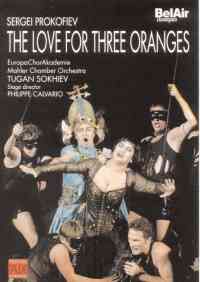
The outdoor romp of Philippe Calvario's Aix Festival production is dominated by the outlandish costumes of Aurore Popineau, including a festish-queen Fata Morgana who is flanked by bondage-boy...
Prokofiev: The Love for Three Oranges
Alexey Tanovitsky (King of Clubs), Andrey Ilyushnikov (the Prince), Nadezhda Serdjuk (Princess Clarissa), Eduard Tsanga (Leandro), Kirill Dusheschkin (Trouffaldino), Vladislas Sulimsky (Pantalone), Pavel Schmulevich (the magician, Chelio), Ekaterina Shimanovitch (Fata Morgana), Sophie Tellier (Linetta),...
Purchase product
The outdoor romp of Philippe Calvario's Aix Festival production is dominated by the outlandish costumes of Aurore Popineau, including a festish-queen Fata Morgana who is flanked by bondage-boy...
About
Contents and tracklist
- Opera and prologue in four acts, libretto by Prokofiev after Carlo Gozzi
- Alexey Tanovitsky (King of Clubs); Andrey Ilyushnikov (the Prince); Nadezhda Serdjuk (Princess Clarissa); Eduard Tsanga (Leandro); Kirill Dusheschkin (Trouffaldino); Vladislas Sulimsky (Pantalone); Pavel Schmulevich (the magician, Chelio); Ekaterina Shimanovitch (Fata Morgana); Sophie Tellier (Linetta); Natalia Yevstafieva (Nicoletta); Julia Smorodina (Ninetta);Yuriy Vorobiev (the Cook): Alexander Gerasimov (Farfarello);Wojciek Ziarnik (Herald); Juan Noval (Master of Ceremonies) & Michel Fau (The Diva)
- EuropaChorAkademie & Mahler Chamber Orchestra
- Tugan Sokhiev, Philippe Calvario (director)
Awards and reviews
 December 2007
The outdoor romp of Philippe Calvario's Aix Festival production is dominated by the outlandish costumes of Aurore Popineau, including a festish-queen Fata Morgana who is flanked by bondage-boy devils… …Ygan Sokhiev enjoys a much closer relationship with his singers than he ever did during his ill-fated times at Welsh National Opera; he's both deft and definite with the many fluctuations of tempo and character.

The score is crisply punctuated, still recognisably Prokoviev, but he rounds off the rough edges, stressing Ravellian colour and the influence of Rimsky-Korsakov. The balance between pit and stage was faultless, allowing singers to present often thankless vocal lines with ease.
 December 2007
…the comic element is no less strong than in the two rival versions, partly because the sets and costumes are fun and the stage movement quite good… and partly because Tugan Sokhiev paces and colours the score at least as idiomatically as Nagano and far better than Denève, while his orchestra is by some distance the best of the three. There may not be any star names in the mainly Russian cast, but they all have strong voices and look confident on stage.