Rautavaara: Manhattan Trilogy & Symphony No. 3
Helsinki Philharmonic Orchestra, Leif Segerstam
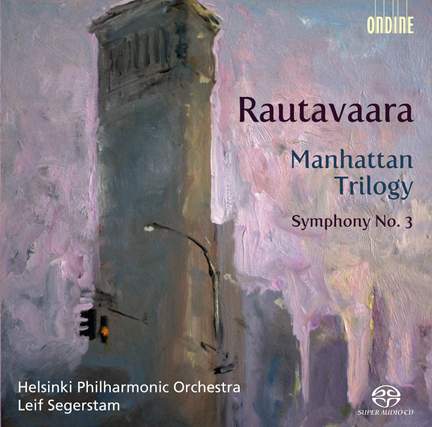
The music is full of voluptuous, organic melody, rich textures and a subtle yet surging development. Segerstam's performance shows sensitivity, a seamless evolution and lush sound.
Rautavaara: Manhattan Trilogy & Symphony No. 3
Helsinki Philharmonic Orchestra, Leif Segerstam
Purchase product

We pay more royalties to artists and composers than any other streaming service with our innovative Fair Play pay-per-second model
We pay artists and composers fairly with our pay-per-second model
The music is full of voluptuous, organic melody, rich textures and a subtle yet surging development. Segerstam's performance shows sensitivity, a seamless evolution and lush sound.
About
Contents and tracklist
Awards and reviews
 March 2008
The music is full of voluptuous, organic melody, rich textures and a subtle yet surging development. Segerstam's performance shows sensitivity, a seamless evolution and lush sound.
 2010
2010
Rautavaara studied at the Juilliard School in 1955-56 and Manhattan Trilogy (2004) was commissioned to celebrate its centennial. In recalling his youthful sojourn in the Big Apple, the composer deployed the full panoply of his late orchestral manner in a hugely engaging triptych describing his 'hopeful Daydreams', 'sudden Nightmares of doubt' and 'slowly breaking Dawn of the personality'.
Where Segerstam's vivid interpretation, allied to Ondine's sumptuous recording, glows through its 20 minutes, Inkinen provides a beautifully focused reading, nearly two min- utes swifter, with every detail brought out to telling effect.
Not the most gripping of Rautavaara's recent orchestral essays Manhattan Trilogy is nonetheless accomplished. What connects it to the Third Symphony (1959-61) is the treatment of the past. The symphony – one of the finest of the post-war period, serially organised within a vibrant tonal framework – recreates the idiom of Bruckner from a late-1950s sensibility and, ironically, remains the more progressive.
Rautavaara's most recent symphony, the Eighth (1999), was memorably recorded by Segerstam (Ondine). Inkinen once again produces a refined interpretation with crystal-clear detail although Segerstam achieved more grandeur in the peroration. Choice here really will depend on couplings (the Harp Concerto on Ondine). The revision of the Sixth Symphony's finale as a – presumably – stand-alone concert piece shorn of its part for synthesiser works well enough, though it is no substitute for the whole work, for which turn to Max Pommer's bracing account (also with the Helsinki Philharmonic) for Ondine. In context, though, the Naxos programme works most effectively and is a nearperfect introduction to Rautavaara's late manner.
Both discs are highly recommendable; at its price, the Naxos is hard to beat but Ondine has the Third. Buy both!