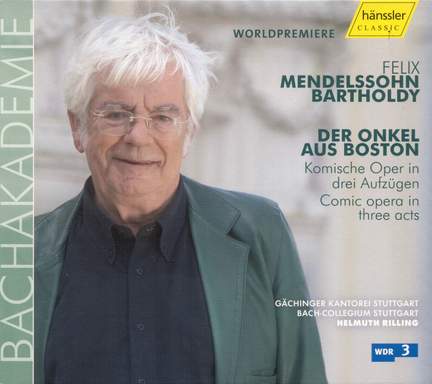
Mendelssohn: Der Onkel aus Boston
Carsten Süss (Tenor), Lothar Odinius (Tenor), Kate Royal (Soprano), István Kovács (Bass), Bernd Valentin (Baritone), Andreas Daum (Bass)
Stuttgart Bach Collegium, Gächinger Kantorei Stuttgart, Helmuth Rilling
Among the singers, Kate Royal stands out for the warmth of her characterisation in the central soprano role; but the entire cast seems to have thrown itself into the project with enthusiasm.
Mendelssohn: Der Onkel aus Boston
Carsten Süss (Tenor), Lothar Odinius (Tenor), Kate Royal (Soprano), István Kovács (Bass), Bernd Valentin (Baritone), Andreas Daum (Bass)
Stuttgart Bach Collegium, Gächinger Kantorei Stuttgart, Helmuth Rilling
Purchase product

Among the singers, Kate Royal stands out for the warmth of her characterisation in the central soprano role; but the entire cast seems to have thrown itself into the project with enthusiasm.
About
Felix Mendelssohn (1809-1847) was one of the great child prodigies of music history. His immortal Midsummer Night’s Dream Overture was written at the age of 17, but this long-lost masterpiece was created three years earlier. Written when Mendelssohn was 14, Der Onkel aus Boston, oder Die beiden Neffen ("The Uncle from Boston, or The Two Nephews") is a full-length, three-act comic opera displaying staggering skill and talent. The famed conductor and musicologist Helmut Rilling discovered the score in Mendelssohn’s handwriting in the Berlin State Library. Rilling prepared the work and gave the first belated public performance in Essen, Germany on October 3, 2004. He then brought it to the Oregon Bach Festival for the American premiere on July 3, 2005.
Contents and tracklist
- Lothar Odinius (tenor), Kate Royal (soprano), Carsten Suss (tenor), Julia Bauer (soprano), Bernd Valentin (baritone), Istvan Kovacs (bass), Andreas Daum (bass)
- Gächinger Kantorei, Bach-Collegium Stuttgart
- Helmuth Rilling
Awards and reviews
 October 2005
Among the singers, Kate Royal stands out for the warmth of her characterisation in the central soprano role; but the entire cast seems to have thrown itself into the project with enthusiasm.
Opera Today
Helmut Rilling’s fine sense of style makes this recording immediately accessible, with tempos that suit the music quite well. At the same time, his deft handling of the orchestra contributes another dimension to this score.