Special offer. The Grainger Edition Volume 8
Works for Wind Orchestra Part 2
Royal Northern College of Music Wind Orchestra, Timothy Reynish, Clark Rundell
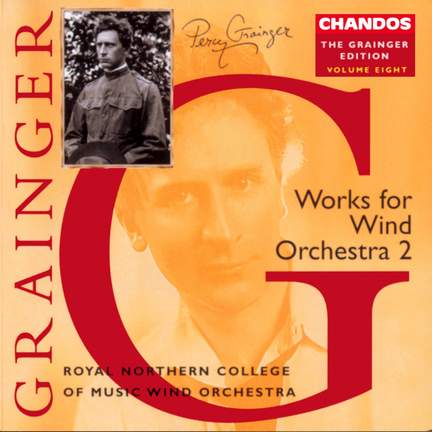
Rundell's compelling realisation of the extraordinary Hill Song No 1 – regarded by Grainger as one of his finest achievements and performed here in its original guise for two piccolos, six oboes,...
Special offer. The Grainger Edition Volume 8
Works for Wind Orchestra Part 2
Royal Northern College of Music Wind Orchestra, Timothy Reynish, Clark Rundell
Purchase product

We pay more royalties to artists and composers than any other streaming service with our innovative Fair Play pay-per-second model
We pay artists and composers fairly with our pay-per-second model
Rundell's compelling realisation of the extraordinary Hill Song No 1 – regarded by Grainger as one of his finest achievements and performed here in its original guise for two piccolos, six oboes,...
About
Contents and tracklist
- Royal Northern College of Music Wind Orchestra, Timothy Reynish, Hubert Francis, Roberto Garcia, Martin Quinn, Glenn Tweedie, Simon Bailey, Ian Gray
Awards and reviews
 2010
2010
Rundell's compelling realisation of the extraordinary Hill Song No 1 – regarded by Grainger as one of his finest achievements and performed here in its original guise for two piccolos, six oboes, six cors anglais, six bassoons and double bassoon – was actually made by BBC Manchester back in 1992; the remaining items date from 1997 and benefit from the splendid sound and balance achieved by Chandos.
Another of Grainger's most striking wind-band compositions opens the disc, namely the 12- minute The Power of Rome and the ChristianHeart.
Both the Children's March and Bell Piece feature some unexpected vocal contributions. In the latter – a charming 'ramble' on John Dowland's Now, O now I needs must part – Grainger incorporates a bell part specially written for his wife, Ella.
The delightfully piquant arrangements of BlitheBells and The Immovable Do date from March 1931 and November/December 1939 respectively.
These fine players equally revel in the 'scrunchy' harmonies of the eventful version of Irish Tunefrom County Derry (made in 1920 for military band and pipe-organ). That just leaves the boisterous Marching Song of Democracy, which Rundell again directs as to the manner born.