Monteverdi: Il sesto libro de madrigali, 1614
Concerto Italiano, Rinaldo Alessandrini
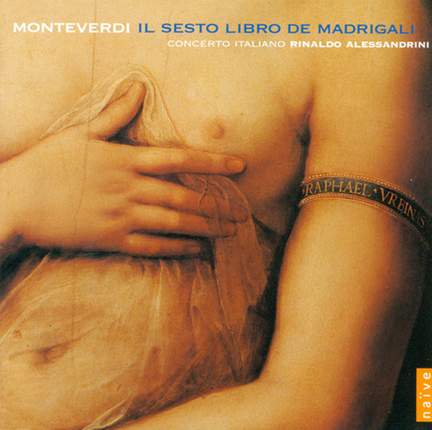
Awards:
-
Gramophone Magazine, August 2006, Editor's Choice

Three things stand out about Alessandrini's version. First, his extraordinary feel for the words… Second, his revised edition which gives him access to newly revealed dissonances… And third,...
Monteverdi: Il sesto libro de madrigali, 1614
Concerto Italiano, Rinaldo Alessandrini
Purchase product

We pay more royalties to artists and composers than any other streaming service with our innovative Fair Play pay-per-second model
We pay artists and composers fairly with our pay-per-second model
Awards:
-
Gramophone Magazine, August 2006, Editor's Choice
Three things stand out about Alessandrini's version. First, his extraordinary feel for the words… Second, his revised edition which gives him access to newly revealed dissonances… And third,...
About
Contents and tracklist
2a parte - Ditelo, o fiumi, e voi ch'udiste Glauco (Say it, o rivers, and you who heard Glaucus)
Track length1:59
3a parte - Dara la notte il sol lume all terra (The Sun will illuminate the earth by night)
Track length2:26
4a parte - Ma te raccoglie, o Ninfa, in grembo (For heaven gathers you in to its breast)
Track length3:16
Awards and reviews
-
Gramophone MagazineAugust 2006Editor's Choice
 July 2006
Three things stand out about Alessandrini's version. First, his extraordinary feel for the words… Second, his revised edition which gives him access to newly revealed dissonances… And third, his generally upbeat tempos… which lend a marvellous freshness to 'Qui rise' and other tracks.
 2010
2010
Monteverdi's Sixth Book of Madrigals (1614) is significant for including both traditional polyphonic and stile nuove concerted madrigals. In his booklet-notes, Rinaldo Alessandrini points out that this is also a 'book of partings': many of the madrigals seem to have been written much earlier than the published date, at a time when Monteverdi suffered the loss of his wife Claudia and his live-in pupil, the singer Caterina Martinelli.
All the texts deal with loss both temporary or permanent – although it's touching to note that the final madrigal, Presso un fiume tranquillo, paints a lovers' reconciliation possibly emblematic of a Heavenly reunion.
When discussing this repertoire it's almost a cliché to say that Concerto Italiano's approach is analytical, La Venexiana's more broadly coalescent (on Glossa). However, this new recording really goes far beyond the supple elegance of line for which La Venexiana are famous, with Alessandrini and his crew employing a tense, edgy rhetoric to reveal an inner psychology while sacrificing neither precision of ensemble nor beauty of sound. Concerto Italiano are now such a sensitive instrument that they respond to the emotional exigencies of the texts like silk to the breeze. Listen to the passionate terza parte of the Lamento d'Arianna; or the final line of Zefirotorna, where the drawn-out dissonances are almost physically painful; or the incredible dynamic and rhythmic control in the Sestina; or the fluid, frighteningly accurate ornamentation in Qui rise, o Tirsi. You could find 100 such examples without ever conveying the many excellences of this recording.