Molter & Mozart: Clarinet Concertos
Kari Kriikku (clarinet in D, basset clarinet)
Tapiola Sinfonietta, John Storgårds
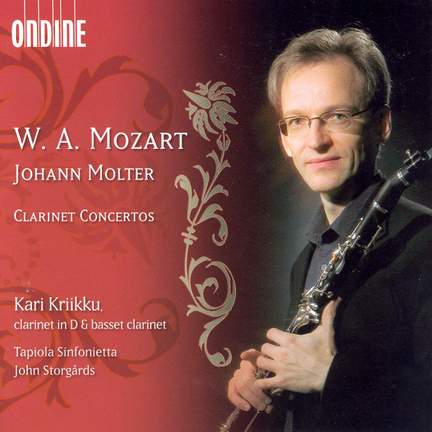
Kari Kriikku's basic tone is light and fluid, his articulation and dynamics inventively varied.
In the first movement of the Mozart he finds a hint of playfulness amid the music's familiar autumnal...
Molter & Mozart: Clarinet Concertos
Kari Kriikku (clarinet in D, basset clarinet)
Tapiola Sinfonietta, John Storgårds
Purchase product

We pay more royalties to artists and composers than any other streaming service with our innovative Fair Play pay-per-second model
We pay artists and composers fairly with our pay-per-second model
Kari Kriikku's basic tone is light and fluid, his articulation and dynamics inventively varied.
In the first movement of the Mozart he finds a hint of playfulness amid the music's familiar autumnal...
About
Contents and tracklist
Awards and reviews
 2010
2010
Kari Kriikku's basic tone is light and fluid, his articulation and dynamics inventively varied.
In the first movement of the Mozart he finds a hint of playfulness amid the music's familiar autumnal lyricism, enhanced by witty, spontaneous- sounding touches of ornamentation. But with his acute sensitivity to harmonic flux, he never underestimates the moments where the music seems to turn in on itself: say, in the shift to A minor in the first-movement recapitulation (for which he finds a haunting, withdrawn new colour), or in the melancholy shadows that flit across the bubbling surface of the finale.
Under John Storgårds, the Tapiola Sinfonietta (with violins properly divided left and right) provide typically polished, stylish support, and shape even apparently routine accompanying figures like the oscillating quavers in the Adagio with finesse.
Kriikku swaps basset-clarinet for a stratospheric D clarinet in three concertos by Johann Melchior Molter, written in the late 1740s when the clarinet was still in its infancy. The music, often sounding like a cross between Vivaldi and CPE Bach at his most complaisant, is agreeable, if hardly distinctive. But Kriikku draws miracles of delicate shading from his piercing, trumpet-like instrument, whether in the bouncy Allegros (though you may be fazed by his jokily over-the-top cadenza in the finale of No 4), or in the soulful minor-key slow movements of Nos 1 and 4.
In both Mozart and Molter, Ondine's recorded sound has an attractive transparency and glow, with an ideally judged balance between clarinet and orchestra.
 May 2006
There have been first-rate recordings of the Mozart concerto on the basset-clarinet, with its wonderfully oily additional low notes, from, inter alia, Dame Thea King, Michael Collins and Wolfgang Meyer. Kriikku is at least their equal in vitality, subtlety and poetic insight. His basic tone is light and fluid, his articulation and dynamics inventively varied. In the first movement he finds a hint of playfulness amid the music's familiar autumnal lyricism, enhanced by witty, spontaneous-sounding touches of ornamentation. Kriikku swaps basset-clarinet for a stratospheric D clarinet in three concertos by Johann Melchior Molter, written in the late 1740s when the clarinet was still in its infancy. ...Kriikku draws miracles of delicate shading from his piercing, trumpet-like instrument... Ondine's recorded sound has an attractive transparency and glow... with an ideally judged balance between clarinet and orchestra.