Berg: Sieben frühe Lieder
Anne Sofie von Otter (mezzo)
Wiener Philharmoniker, Claudio Abbado
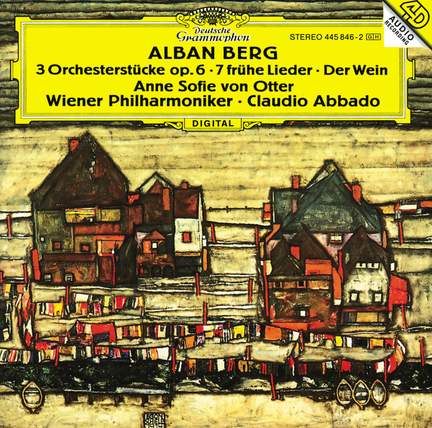
Anne Sofie von Otter included the Seven EarlySongs on a recital disc (no longer available on CD). Singing with orchestra, von Otter naturally works on a larger scale. The words are more firmly...
Berg: Sieben frühe Lieder
Anne Sofie von Otter (mezzo)
Wiener Philharmoniker, Claudio Abbado
Purchase product

We pay more royalties to artists and composers than any other streaming service with our innovative Fair Play pay-per-second model
We pay artists and composers fairly with our pay-per-second model
Anne Sofie von Otter included the Seven EarlySongs on a recital disc (no longer available on CD). Singing with orchestra, von Otter naturally works on a larger scale. The words are more firmly...
About
Contents and tracklist
- Anne Sofie von Otter (mezzo-soprano)
- Wiener Philharmoniker
- Claudio Abbado
- Recorded: 1993-04-21
- Recording Venue: Grosser Saal, Musikverein, Wien
- Anne Sofie von Otter (mezzo-soprano)
- Wiener Philharmoniker
- Claudio Abbado
- Recorded: 1993-10-05
- Recording Venue: Grosser Saal, Musikverein, Wien
- Wiener Philharmoniker
- Claudio Abbado
- Recorded: 1992-04-02
- Recording Venue: Grosser Saal, Musikverein, Wien
Awards and reviews
 2010
2010
Anne Sofie von Otter included the Seven EarlySongs on a recital disc (no longer available on CD). Singing with orchestra, von Otter naturally works on a larger scale. The words are more firmly bound into the vocal line; there isn't the detailed give-and-take that's possible with a pianist. But the outline of her interpretation remains that of a true Lieder singer, always lighting upon unexpected subtleties of colour and emphasis to inflect the poetry. In all this Abbado is an equal partner. Von Otter needs careful accompaniment in the concert hall if she's to dominate an orchestra and Abbado, in co-operation with DG's technical team, has produced a balance that never drowns her, but still sounds fairly natural. In Der Wein, Berg's late concert aria, von Otter and Abbado catch the lilt of the jazz rhythms. In the Seven EarlySongs are they a touch too cool? Perhaps, but in the final song, 'Sommertage', they throw caution to the winds and end the cycle on a passionate high.
Abbado has recorded the Three OrchestralPieces before and his 1970s recording has long been one of the standard versions of this work.
The opportunity to see how his thoughts have developed since then brings more surprises than might have been expected.
In short, his outlook is progressing from the Italianate to the Germanic. No doubt the influence of the Vienna Philharmonic Orchestra has much to do with this and their marvellously eloquent playing is one of the prime attractions of the disc.
In their company Abbado finds more depth and complexity in the music than before, although that does mean that the March loses the Bartókian attack and driving rhythms that made his first version so exciting.