Special offer. Biber: Missa Christi resurgentis, etc.
The English Concert & Choir, Andrew Manze
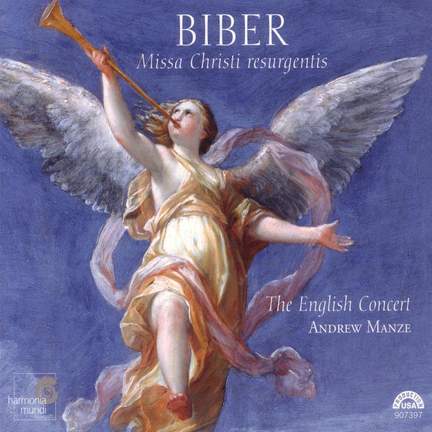
…it is Manze, perhaps, who best captures the radiant character of Biber's score and who seems most readily to revel in its sheer vitality. His upper and middle vocal strands illuminate the...
Special offer. Biber: Missa Christi resurgentis, etc.
The English Concert & Choir, Andrew Manze
Purchase product

We pay more royalties to artists and composers than any other streaming service with our innovative Fair Play pay-per-second model
We pay artists and composers fairly with our pay-per-second model
…it is Manze, perhaps, who best captures the radiant character of Biber's score and who seems most readily to revel in its sheer vitality. His upper and middle vocal strands illuminate the...
About
Contents and tracklist
Awards and reviews
 September 2005
…it is Manze, perhaps, who best captures the radiant character of Biber's score and who seems most readily to revel in its sheer vitality. His upper and middle vocal strands illuminate the music with brilliant meteoric showers…
 2010
2010
The Missa Christi resurgentis seems to have lain in obscurity for centuries, known about but otherwise ignored, until brought to life by James Clements and published by A-R Editions in the US. The New York Collegium gave the first modern performance in 2003 and The English Concert followed a year later with the European premiere. The recordings differ in the way the music is presented: both are very welcome.
After perhaps descending to the crypt to sneer at the tomb of Prince-Archbishop Hieronymus Colloredo, Mozart's employer, the visitor to the Baroque cathedral of Salzburg cannot fail to be impressed by the interior with its four galleries. Biber, who had joined the service of the Archbishop Maximilian Gandolph in 1670, made full use of the cathedral's spatial opportunities: two four-part choirs are complemented by string and brass groups used, like Venetian cori spezzati, both antiphonally and in combination.
The Mass was probably written for Easter 1674.
It begins with a sonata, the strings answering the brass. Andrew Manze takes it straight; while Andrew Parrott, by slurring the second and third notes, adds an appealing rakishness to the phrase.
'Christe eleison' sees the first of several appearances by three basses, a difficult ensemble to balance.
The Americans, with a light first bass, make it sound quite airy. The English Concert, at a slower speed and a lower pitch, tend to growl away in their boots. The 'Et exspecto' section of the Credo finds Manze's sopranos singing high with a real sense of awe. In general, the singing of the Choir of The English Concert is the more accomplished: some of the solo work in Parrott's choir sounds tentative and the boy alto causes moments of unease for the listener. The orchestral playing is first-rate on both recordings.
Which to choose must depend on the supplementary pieces. Manze includes five sonatas for strings. The tonal palette is limited, as is usual for the time, to the home key with occasional excursions to the relative major or minor. The first movement of the Sonata a 6 for trumpet and strings reappears on the American disc. Here, however, the context is that of an actual service.
It starts with an alternatim setting of the introit Resurrexi by Johann Stadlmayr and includes, as well as the chanting of the epistle and gospel, organ pieces by Kerll and Poglietti. There are also two string sonatas from the Sonatae tam aris collection, one of which includes a fugue theme that anticipates the Allegro of Handel's Concertogrosso, Op 3 No 2.