Nino Rota - Symphonies
Norrkoping Symphony Orchestra, Ole Kristian Ruud
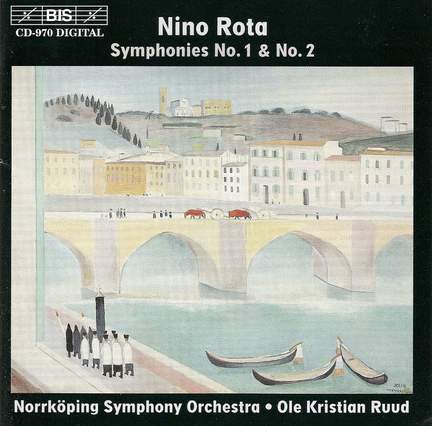
It's fascinating to encounter these early works by Nino Rota, written when he was in his twenties, after a period of study in the USA. Rota's early career was as a church musician, something...
Nino Rota - Symphonies
Norrkoping Symphony Orchestra, Ole Kristian Ruud
Purchase product

We pay more royalties to artists and composers than any other streaming service with our innovative Fair Play pay-per-second model
We pay artists and composers fairly with our pay-per-second model
It's fascinating to encounter these early works by Nino Rota, written when he was in his twenties, after a period of study in the USA. Rota's early career was as a church musician, something...
About
Contents and tracklist
Work length31:56
I. Allegro con moto
Track length10:22
II. Andante
Track length8:42
III. Allegro vivace
Track length4:13
IV. Largo maestoso - Poco più andante - Allegro
Track length8:39
Work length31:20
I. Allegro tranquillo
Track length7:48
II. Allegro molto vivace
Track length7:43
III. Andante con moto
Track length7:45
IV. Allegro vivace
Track length8:04
Awards and reviews
 2010
2010
It's fascinating to encounter these early works by Nino Rota, written when he was in his twenties, after a period of study in the USA. Rota's early career was as a church musician, something to which he returned late in life, after decades composing for the screen and the theatre. The influences in the First Symphony (1935-9) include Sibelius and Stravinsky but perhaps more significantly Copland and Hindemith. It's clearly a youthful work, a bit long-winded, but showing Rota's already firm grasp of complicated and sophisticated orchestration. The last, fourth, movement especially seems to have a maturity that points towards future greatness.
The Second Symphony, which he began in 1937, while still at work on the First, is even more Coplandesque. What would this have sounded like to an audience in the 1930s? (It wasn't performed until 1970.) In one way it would have seemed conservative in the extreme, showing no tendency towards atonality or any influence of jazz. The score carries a subtitle, 'Tarantina – Anni di pellegrinaggio', referring to the period Rota spent in the extreme south of Italy, teaching in Taranto. It could be dismissed as 'light music', and the style wouldn't have offended the most sensitive ears, yet each movement is full of beautiful instrumental detail and constructed in a pleasing way. Rota had yet to find his unmistakable voice, one infused with irony and humour, which would make him the perfect match for Fellini. Devotees of his film music may find these symphonies bland, but anyone who enjoys the contemporary style of Alwyn or Coates in England will find them worth while. The orchestra plays both symphonies with a good sense of period manner, never overdoing the lush sound.