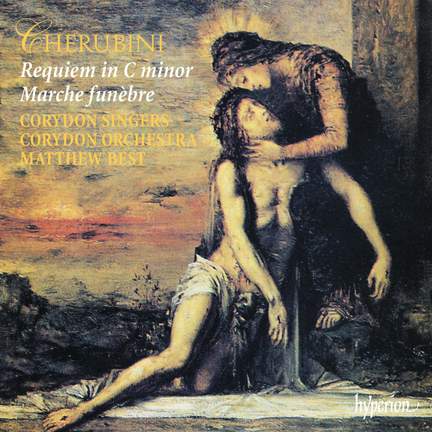
Special offer. Cherubini: Requiem
Corydon Singers, Corydon Orchestra, Matthew Best
It would be an oversimplification to suggest that Matthew Best emphasises the Beethoven rather than the Berlioz aspect of the main work here; but he does seem less interested in the fascinating...
Special offer. Cherubini: Requiem
Corydon Singers, Corydon Orchestra, Matthew Best
Purchase product

It would be an oversimplification to suggest that Matthew Best emphasises the Beethoven rather than the Berlioz aspect of the main work here; but he does seem less interested in the fascinating...
About
Posterity has a habit of elevating the obscure and neglecting the famous. Thus it is that Cherubini, hailed by Beethoven as 'the greatest living composer', is today often forgotten; 'If I were to write a Requiem, Cherubini's would be my only model', Beethoven continued and the work was performed at his funeral in 1827. Schumann's opinion was that it was 'without equal in the world'. Berlioz considered that 'the decrescendo in the Agnus Dei surpasses everything that has ever been written of the kind'. Cherubini was anxious to reflect the spirit as well as the meaning of the text and so, to avoid any unwelcome associations with opera, he decided to dispense altogether with soloists. It is a work of remarkable intensity, full of attractive choral and orchestral writing. The orchestral Marche funbre is no solemn ceremonial but an anguished, grief-stricken death-march: perhaps the work Beethoven had in mind when he described Cherubini as 'Europe's foremost dramatic composer'.
Contents and tracklist
- Corydon Orchestra
- Matthew Best
- Corydon Orchestra, Corydon Singers
- Matthew Best
Awards and reviews
 2010
2010
It would be an oversimplification to suggest that Matthew Best emphasises the Beethoven rather than the Berlioz aspect of the main work here; but he does seem less interested in the fascinating use of colour as an element in the actual invention than in the rugged moral strength and the force of the statements. The recording reflects this emphasis, and is firm and clear without being especially subtle over orchestral detail. The choir delivers the Diesirae powerfully, and much dramatic vigour is recalled in the fugue traditionally reserved for 'Quam olim Abrahae'. Berlioz, however, was satirical about Cherubini's fugues, and saved his admiration for the wonderful long decrescendo that ends the Agnus Dei. This is beautifully controlled here.
Best includes the tremendous Marche funèbre, inspiration here again for Berlioz. Best handles this superbly, opening with a merciless percussion crash and sustaining the pace and mood unrelentingly. It sounds more original than ever, a funeral march that, rather than mourn or honour, rages against the dying of the light.