Thomas Tallis - Complete Works Volume 7
Music for Queen Elizabeth
Chapelle du Roi, Alistair Dixon
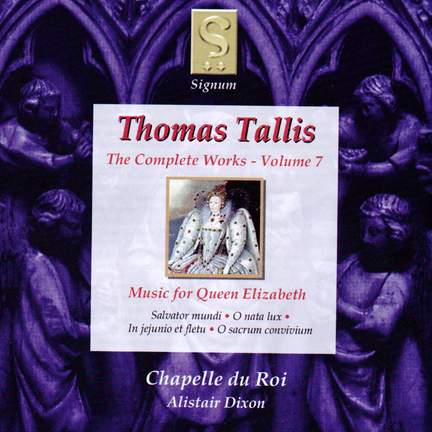
Volume 7 of Chapelle du Roi's complete series of Tallis recordings, is a further witness to the composer's consummate command of his art, in whatever religious or political situation he found...
Thomas Tallis - Complete Works Volume 7
Music for Queen Elizabeth
Chapelle du Roi, Alistair Dixon
Purchase product
Volume 7 of Chapelle du Roi's complete series of Tallis recordings, is a further witness to the composer's consummate command of his art, in whatever religious or political situation he found...
About
Contents and tracklist
Awards and reviews
 2010
2010
Volume 7 of Chapelle du Roi's complete series of Tallis recordings, is a further witness to the composer's consummate command of his art, in whatever religious or political situation he found himself at each changing period of his life. It might seem puzzling that Elizabeth, in 1575, should sanction the publication of Tallis's and Byrd's Cantiones sacrae, but she apparently enjoyed hearing Latin-texted music in her private chapel, and many of the prayers would have been familiar from her childhood.
Dixon makes a number of interesting points.
He demonstrates Tallis's use of older material: for example, the Latin Absterge Domine, side by side with its later English contrafactum Discomfortthem, O Lord. He shows how five-voice scoring might be used for an all-male ensemble, or privately in, say, a recusant family situation, with ladies on the top line (In ieiunio et fletu). Tallis's craftsmanship is further revealed in his two through-composed psalms, Domine, quis habitabit and Laudate Dominum, which, while adhering to 16th-century principles of syllabic word-setting, are varied enough to relieve the inevitable tedium. We hear finally, Dixon's masterly interpretation of Spem in alium 'in the round' – or 'in horseshoe formation' – possibly the Chapelle's highest achievement to date.