Schubert: Piano Trio No. 2 in E flat major, D929
The Florestan Trio
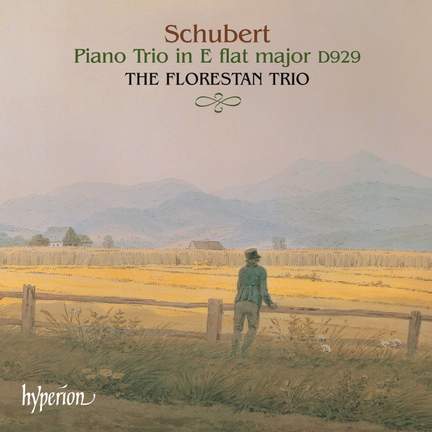
The Florestan Trio's approach comes into its own in the third movement Scherzo, played with feathery delicacy and real ensemble...All round, a flawless account, celebrating a Schubert who is...
Schubert: Piano Trio No. 2 in E flat major, D929
The Florestan Trio
Purchase product

The Florestan Trio's approach comes into its own in the third movement Scherzo, played with feathery delicacy and real ensemble...All round, a flawless account, celebrating a Schubert who is...
About
The Florestan Trio follow up their hugely successful release of Schubert's B flat trio (CDA67273) with this stunning performance of the E flat trio. In an article in The Guardian recently, pianist Susan Tomes talked of the recording sessions, during which there were many discussions about performing "the most monumental work in our repertoire". The result, according to Ms Tomes, is a portrait of the Florestans painting a portrait of Schubert. Schubert dedicated the work to 'nobody save those who find pleasure in it'. The first movement is strongly rhythmic, the second is infused with an emotive Swedish folksong melody. The tempo of this movement was determined some twenty years ago, when it occurred to Ms Tomes during a winter walk that her footsteps trudging through the snow were exactly the right tempo for the opening chords. The Scherzo incorporates a caressing waltz and a lusty peasant dance. The work's length proved challenging for publishers and so Schubert consented to cut 98 bars from the final movement. The Florestan Trio offer both versions on this disc, providing a rare chance to hear the original, much longer version in all its glory.
Contents and tracklist
Awards and reviews
 20th November 2002
The Florestan Trio's approach comes into its own in the third movement Scherzo, played with feathery delicacy and real ensemble...All round, a flawless account, celebrating a Schubert who is as much the son of Haydn and Mozart as the father of Schumann and Brahms.
 2010
2010
This profound, yet still often light-hearted, E flat Trio was written in the same month (November) that Schubert completed Winterreise.
We are instantly reminded of this in the Florestan's eloquent and aptly paced account of the C minor Andante con moto, with what Richard Wigmore describes as its 'stoical trudging gait'.
Its essential melancholy is gently caught, first by the cellist, Richard Lester, and then equally touchingly by the pianist, Susan Tomes. The dramatically rhythmic opening of the first movement could almost be by Beethoven, but once again these players show themselves to be completely within the Schubertian sensibility and catch perfectly the atmosphere of the more important lyrical motif, first heard on the cello (in bars 15 and 16), which is to dominate the movement alongside the engaging repeated-note figure (so delicately articulated by the piano).
They set a winningly jaunty mood for the finale, which is maintained whenever the main theme reappears, even though, as always with late Schubert, much happens to vary the music's mood and atmosphere. Another superb performance then from the Florestans, penetrating, yet full of spirited spontaneity, and in spite of the moments of sadness, much Schubertian bonhomie.
The recording is completely lifelike and very well balanced.