Special offer. Schumann - Lieder
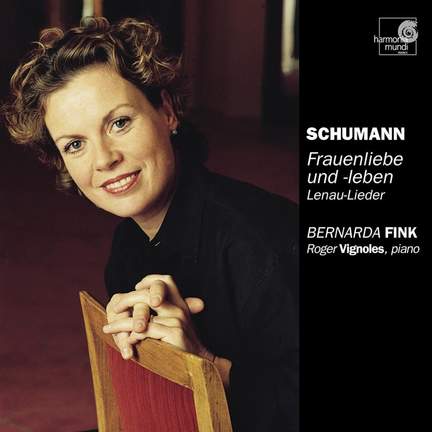
Bernarda Fink (mezzo-soprano) & Roger Vignoles (piano)
Awards:
-
Building a Library, June 2003, Modern Studio Recording Choice

-
Gramophone Magazine, July 2002, Editor's Choice

Bernarda Fink proves conclusively here that she can be just as compelling in German song as she is in Baroque works. For a start few accounts of any of these pieces have been quite so beautifully...
Special offer. Schumann - Lieder
Bernarda Fink (mezzo-soprano) & Roger Vignoles (piano)
Purchase product

We pay more royalties to artists and composers than any other streaming service with our innovative Fair Play pay-per-second model
We pay artists and composers fairly with our pay-per-second model
Awards:
-
Building a Library, June 2003, Modern Studio Recording Choice
-
Gramophone Magazine, July 2002, Editor's Choice
Bernarda Fink proves conclusively here that she can be just as compelling in German song as she is in Baroque works. For a start few accounts of any of these pieces have been quite so beautifully...
About
Contents and tracklist
Awards and reviews
-
Gramophone MagazineJuly 2002Editor's Choice
 2010
2010
Bernarda Fink proves conclusively here that she can be just as compelling in German song as she is in Baroque works. For a start few accounts of any of these pieces have been quite so beautifully and effortlessly sung. Not a note in this recital is ugly or mishandled; everything is projected on a stream of perfectly produced, mellow mezzo tone. In itself, that's almost enough to recommend the disc. But Fink has so much more to offer. Her interpretation of the oft-recorded Frauenliebe cycle isn't one with the kind of overwhelming emotional tug evinced by Baker and von Otter, yet in her slightly more reticent way Fink conveys just as much feeling as her rivals. Her sweet, reflective, slightly vibrant tone very much calls to mind Seefried's and Isokoski's equally artless style among soprano versions. With Roger Vignoles as a sympathetic and positive partner, Fink's version deserves to be equated with those of her distinguished predecessors.
There's no anti-climax in the other performances.
The very familiar 'Nussbaum' and 'Aufträge' are as delightfully eager and spontaneous as they ought to be. Those ineffably Schumannesque pieces, 'Die Lotosblume' and, in the Op 90 settings of Lenau, 'Meine Rose', receive treatment, in timbre and line and verbal assurance that would be hard to better. The recording has the singer blessedly forward so one catches the true flavour of her voice and words. A joy from start to finish.