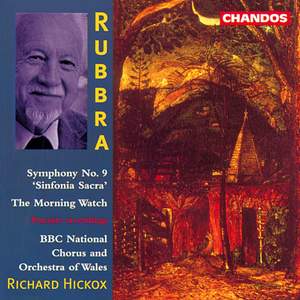


Special offer. Rubbra: Symphony No. 9, Op. 140 'Sinfonia Sacra', etc.
Lynne Dawson (soprano), Della Jones (contralto), Stephen Roberts (bass)
BBC National Chorus & Orchestra of Wales, Richard Hickox
Awards:
-
Penguin Guide, Rosette
The Ninth (1973) is Rubbra's most visionary utterance, and its stature has so far gone unrecognised.
(This is its only recording.) Its subtitle, Sinfoniasacra, gives a good idea of its character....
Special offer. Rubbra: Symphony No. 9, Op. 140 'Sinfonia Sacra', etc.
Lynne Dawson (soprano), Della Jones (contralto), Stephen Roberts (bass)
BBC National Chorus & Orchestra of Wales, Richard Hickox
Purchase product
Awards:
-
Penguin Guide, Rosette
The Ninth (1973) is Rubbra's most visionary utterance, and its stature has so far gone unrecognised.
(This is its only recording.) Its subtitle, Sinfoniasacra, gives a good idea of its character....
About
Contents and tracklist
- Richard Hickox, BBC National Orchestra of Wales, BBC National Chorus of Wales
- Richard Hickox, BBC National Orchestra of Wales, Stephen Roberts, BBC National Chorus of Wales, Della Jones, Lynne Dawson
Awards and reviews
-
Penguin GuideRosette
2010
The Ninth (1973) is Rubbra's most visionary utterance, and its stature has so far gone unrecognised.
(This is its only recording.) Its subtitle, Sinfoniasacra, gives a good idea of its character. It tells the story of the Resurrection very much as do the Bach Passions. There are three soloists: the contralto narrates from the New Testament, while the soprano takes the part of Mary Magdalen and the baritone that of Jesus. Other parts, those of disciples and angels, are taken by the chorus, which also functions outside the action, in four settings of meditative Latin texts from the Roman liturgy or in Lutheran chorales to which Rubbra put verses by Bernard de Nevers. The symphonic dimension is reinforced by the opening motive, which pretty well dominates the work. Its argument unfolds with a seeming inevitability and naturalness that's the hallmark of a great symphony.
Its depth and beauty call to mind only the most exalted of comparisons and it should be heard as often as Gerontius or the War Requiem. This is music of an inspired breadth and serenity and everyone connected with this magnificent performance conveys a sense of profound conviction.
The Morning Watch is one of Rubbra's most eloquent choral pieces. It dates from 1946, and so comes roughly half-way between the Fourth and Fifth Symphonies. A setting of the 17thcentury metaphysical poet, Henry Vaughan, it too is music of substance and its long and moving orchestral introduction is of the highest order of inspiration.