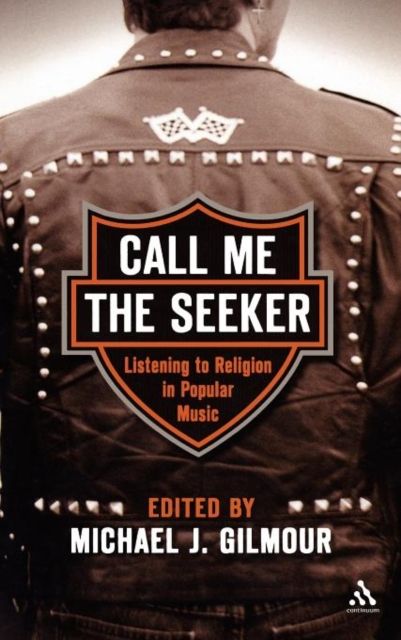
Call Me the Seeker
Listening to Religion and Popular Music
- Editor: Gilmour, Michael J.
Modern-day scholars frequently study the interplay between religion and popular culture, especially comic books, movies, television, and literature; however, one rarely unearths an in-depth...
Call Me the Seeker
Listening to Religion and Popular Music
- Editor: Gilmour, Michael J.
Purchase product
Other available formats

Modern-day scholars frequently study the interplay between religion and popular culture, especially comic books, movies, television, and literature; however, one rarely unearths an in-depth...
About
"*One of very few books on religion and popular music *Covers a wide range of musical styles, from heavy metal and rap to country, jazz and Broadway musicals *The essays are written by academics and informed by their enthusiasm for the music Many books have explored the relationship between religion and film, but few have yet examined the significance of religion to popular music. Call Me The Seeker steps into that gap. Michael Gilmour's introductory essay gives a state-of-the-discipline overview of research in the area. He argues that popular songs frequently draw from and "interpret" themes found in the conceptual and linguistic worlds of the major religions and reveal underlying attitudes in those who compose and consume them. He says these "texts" deserve more serious study. The essays in the book start an on-going conversation in this area, bringing a variety of methodologies to bear on selected artists and topics. Musical styles covered range from heavy metal and rap to country, jazz, and Broadway musicals."
Contents
- Introduction
- Michael J. Gilmour. Radios in Religious Studies Departments: Preliminary Reflections on the Study of Religion in Popular Music
- Section One: Religious Sources behind Popular Music
- Daniel Maoz. Woman as Shekhinah: Kabbalistic References in Bob Dylan's Infidels
- James Knight. "I Ain't Got No Home in This World Anymore": Protest and Promise in Woody Guthrie and the Jesus Tradition
- Michael J. Gilmour. The Prophet Jeremiah, Aung San Suu Kyi, and U2's All That You Can't Leave Behind: On Listening to Bono's Jeremiad
- Section Two: Religious Themes in Popular Music
- Karl J. McDaniel. Suffering and Sacrifice in Context: Apocalypticism and Life beyond Les Miserables. Brian Froese. Comic Endings: Spirit and Flesh in Bono's Apocalyptic Imagination, 1980-1983
- Anna Kessler. Faith, Doubt, and the Imagination: Nick Cave on the Divine-Human Encounter
- Paul Martens. Metallica and the God That Failed: An Unfinished Tragedy in Three Acts
- Harold Penner. The Nature of His Game: A Textual Analysis of "Sympathy for the Devil"
- J. R.C. Cousland. God, the Bad, and the Ugly: The Vi(t)a Negativa of Nick Cave and P. J. Harvey
- Randall Holm. "Pulling Back the Darkness": Starbound with Jon Anderson
- Section Three: Religion and Popular Music's Audiences
- Angela M. Nelson. "God's Smiling on You and He's Frowning Too": Rap and the Problem of Evil
- Tim Olaveson. Transcendent Trancer: A Scholar Experiences Rave in Central Canada
- Andreas Hager. Under the Shadow of the Almighty: Fan Reception of Some Religious Aspects in the Work and Career of the Irish Popular Musician Sinead O'Connor
- Thomas Nesbit. Planet Rock: Black Socioreligious Movements in Early 1980s Electro
- Melanie Takahashi. Spirituality through the Science of Sound: The DJ as Technoshaman in Rave Culture
- Maxine Grossman. Jesus, Mama, and the Constraints on Salvific Love in Contemporary Country Music.
Awards and reviews

Modern-day scholars frequently study the interplay between religion and popular culture, especially comic books, movies, television, and literature; however, one rarely unearths an in-depth study of religion and popular music like this essay collection. Gilmour (New Testament, Providence Coll.; Tangled Up in the Bible: Bob Dylan and Scripture) commissioned various scholars to approach song lyrics by such artists as Bob Dylan, Woody Guthrie, and the group U2 from mythical, religious, and even historical perspectives, seeing the words as tools that portray, understand, humanize, and analyze the relationship between God and man. Music here is an open forum for wrestling with religious questions. In addition to Gilmour's introductory overview of research in the area, there are bibliographic notes, a list of contributors, and an index... [This] book is recommended for religious studies collections in larger academic libraries.- Library Journal
Modern-day scholars frequently study the interplay between religion and popular culture, especially comic books, movies, television, and literature; however, one rarely unearths an in-depth study of religion and popular music like this essay collection...[Gilmour's] book is recommended for religious studies collections in larger academic libraries." - Library Journal