

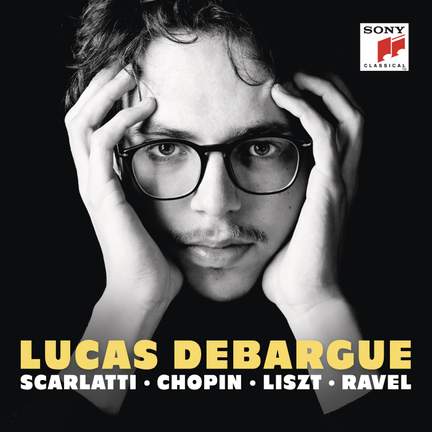
Lucas Debargue plays Scarlatti, Chopin, Liszt & Ravel
Lucas Debargue (piano)
The recital’s centrepiece is Gaspard de la nuit in a remarkable reading that exudes drama, colour and atmosphere. Pacing in ‘Ondine’ is apt, building to the nymph’s feigned tears and bitter...
Lucas Debargue plays Scarlatti, Chopin, Liszt & Ravel
Lucas Debargue (piano)
Purchase product

The recital’s centrepiece is Gaspard de la nuit in a remarkable reading that exudes drama, colour and atmosphere. Pacing in ‘Ondine’ is apt, building to the nymph’s feigned tears and bitter...
About
The most-talked about artist of the 2015 Tchaikovsky Competition created huge excitement and world-wide media attention with his riveting background and “genius-like playing” (Boris Berezovksy). Debargue, who is 25, started the piano late at 11 years old, learning mostly in isolation. After dropping the instrument for three years to play in a rock band and study literature, he started formal piano training aged 20. Placed 4th, he was described by media as “the real winner” of the competition and received the Music Critics’ Association award as “the pianist whose incredible gift, artistic vision and creative freedom have impressed the critics as well as the audience.” Valery Gergiev, the competition’s chairman, broke protocol by letting Debargue play in the winners’ gala and not prizewinner Dmitry Masleev. Lucas Debargue's debut album is a live recording at the Salle Cortot in Paris and documents his first concert in his hometown after the competition. The centrepiece of his first recording is Ravel’s monumentally challenging Gaspard de la nuit. One of the most difficult piano pieces in the repertoire, which Debargue performed to sensational acclaim during the second round of the competition. “It’s a great spiritual work. It’s like a Goya painting, filled with light and darkness.” The recording also includes four coruscating sonatas by Domenico Scarlatti; Chopin’s emotionally intense Ballade No. 4; Liszt’s devilish Mephisto Waltz; and smaller works by Grieg (Lyric Pieces op. 47 no. 3, “Melody”) and Schubert (Moment musical op. 94 no. 3). Debargue says, “I chose the repertoire to go from early Scarlatti to Ravel, with a wonderful romantic bridge of Chopin and Liszt to go between them".
Contents and tracklist
Spotlight on this release
-
An error occurred.
Try watching this video on www.youtube.com, or enable JavaScript if it is disabled in your browser.
Awards and reviews
 June 2016
The recital’s centrepiece is Gaspard de la nuit in a remarkable reading that exudes drama, colour and atmosphere. Pacing in ‘Ondine’ is apt, building to the nymph’s feigned tears and bitter laughter as she disappears into the lake. The sheer desolation conjured in ‘Le gibet’ is all the more palpable for its understatement, the barely audible but incessant bell suggesting incipient madness
