Special offer. Filin
Melissa Aldana (saxophone)
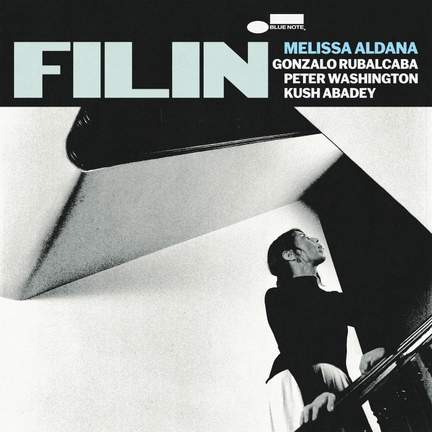
It is Aldana's tonal control and astute lyricism on tenor sax and Gonzalo Rubalcaba's sparse piano voicings and complementary ripples that make the album stand out.
Special offer. Filin
Melissa Aldana (saxophone)
Purchase product

Other available formats

It is Aldana's tonal control and astute lyricism on tenor sax and Gonzalo Rubalcaba's sparse piano voicings and complementary ripples that make the album stand out.
About
Tenor saxophonist Melissa Aldana’s third Blue Note album Filin is an exquisite ballads album that presents stunning new versions of songs drawn from the Filin music tradition of Cuba, a style of popular song from the 1940s-60s that was deeply influenced by American musicians such as Nat King Cole. The word Filin is derived from "feeling" and the deeply felt performances find Aldana with a remarkable quartet featuring the Cuban pianist Gonzalo Rubalcaba with Peter Washington on bass and Kush Abadey on drums, as well as special guest vocalist Cécile McLorin Salvant on two tracks. The band also interprets songs by Brazilian composers Hermeto Pascoal (“Little Church”) and Cartola (“Las Rosas No Hablan”).
Contents and tracklist
- Melissa Aldana (saxophone), Gonzalo Rubalcaba (piano), Peter Washington (bass), Kush Abadey (drumkit)
- Recorded: 2025-04-30
- Recording Venue: Oktaven Audio Studio, Mount Vernon, NY
- Melissa Aldana (saxophone), Gonzalo Rubalcaba (piano), Peter Washington (bass), Kush Abadey (drumkit)
- Recorded: 2025-04-30
- Recording Venue: Oktaven Audio Studio, Mount Vernon, NY
- Melissa Aldana (saxophone), Cécile McLorin Salvant (vocalist), Gonzalo Rubalcaba (piano), Peter Washington (bass), Kush Abadey (drumkit)
- Recorded: 2025-04-30
- Recording Venue: Oktaven Audio Studio, Mount Vernon, NY
- Melissa Aldana (saxophone), Gonzalo Rubalcaba (piano), Peter Washington (bass), Kush Abadey (drumkit)
- Recorded: 2025-04-30
- Recording Venue: Oktaven Audio Studio, Mount Vernon, NY
- Melissa Aldana (saxophone), Cécile McLorin Salvant (vocalist), Gonzalo Rubalcaba (piano), Peter Washington (bass), Kush Abadey (drumkit)
- Recorded: 2025-04-30
- Recording Venue: Oktaven Audio Studio, Mount Vernon, NY
- Melissa Aldana (saxophone), Gonzalo Rubalcaba (piano), Peter Washington (bass), Kush Abadey (drumkit)
- Recorded: 2025-04-30
- Recording Venue: Oktaven Audio Studio, Mount Vernon, NY
- Melissa Aldana (saxophone), Gonzalo Rubalcaba (piano), Peter Washington (bass), Kush Abadey (drumkit)
- Recorded: 2025-04-30
- Recording Venue: Oktaven Audio Studio, Mount Vernon, NY
- Melissa Aldana (saxophone), Gonzalo Rubalcaba (piano), Peter Washington (bass), Kush Abadey (drumkit)
- Recorded: 2025-04-30
- Recording Venue: Oktaven Audio Studio, Mount Vernon, NY
Awards and reviews
 March 2026
It is Aldana's tonal control and astute lyricism on tenor sax and Gonzalo Rubalcaba's sparse piano voicings and complementary ripples that make the album stand out.

In the end, Filin feels like both a homage and a renewal. Aldana reaches back into a cherished tradition not so much to recreate it, but to reclaim it with her own instrumental voice. The result stands as one of her most mature and affecting statements to date, and a reminder that jazz’s future often lies in the seemingly obscure corners of its past.