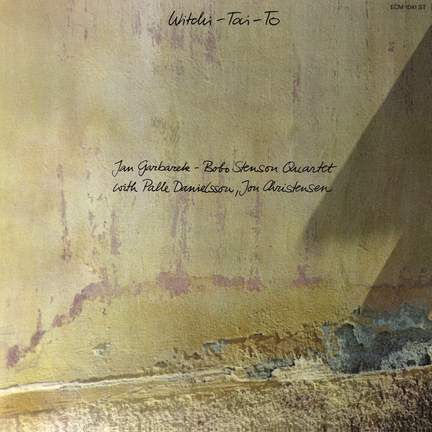
Special offer. Witchi-Tai-To
Jan Garbarek (tenor and soprano saxophones), Bobo Stenson (piano), Palle Danielsson (double bass), Jon Christensen (drums)
Awards:
-
Presto Music, Classic Jazz Recording

The period in which albums like Witchi-Tai-To were conceived was an especially fruitful one, often looked back on fondly by Stenson; many of the tunes, as per the modern idea of the ‘Nordic...
Special offer. Witchi-Tai-To
Jan Garbarek (tenor and soprano saxophones), Bobo Stenson (piano), Palle Danielsson (double bass), Jon Christensen (drums)
Purchase product

Awards:
-
Presto Music, Classic Jazz Recording
The period in which albums like Witchi-Tai-To were conceived was an especially fruitful one, often looked back on fondly by Stenson; many of the tunes, as per the modern idea of the ‘Nordic...
About
In the mid-1970s there was no European jazz group more popular than the Garbarek-Stenson Quartet, and Witchi-Tai-To was voted ‘Record of the Year 1974/75’ in Jazz Forum’s poll. Down Beat gave the album a five-star review: “Those who think that contemporary music from Europe lacks soul-fire are hereby advised to listen to Witchi-Tai-To.”
Bobo Stenson: “The quartet had a chemistry that I’ve very rarely known, and I look back at the whole period as a happy and creative time.” The wide-open programme includes tunes by Carla Bley and Don Cherry as well as the title track composed by Jim Pepper.
Contents and tracklist
- Bobo Stenson Quartet, Jan Garbarek (tenor saxophone), Palle Danielsson (bass (vocal)), Jon Christensen (drums), Bobo Stenson (piano), Jan Garbarek (soprano saxophone)
- Recorded: 1973-11
- Recording Venue: Arne Bendiksen Studio, Oslo
- Bobo Stenson Quartet, Jan Garbarek (tenor saxophone), Palle Danielsson (bass (vocal)), Jon Christensen (drums), Bobo Stenson (piano), Jan Garbarek (soprano saxophone)
- Recorded: 1973-11
- Recording Venue: Arne Bendiksen Studio, Oslo
- Bobo Stenson Quartet, Jan Garbarek (tenor saxophone), Palle Danielsson (bass (vocal)), Jon Christensen (drums), Bobo Stenson (piano), Jan Garbarek (soprano saxophone)
- Recorded: 1973-11
- Recording Venue: Arne Bendiksen Studio, Oslo
- Bobo Stenson Quartet, Jan Garbarek (tenor saxophone), Palle Danielsson (bass (vocal)), Jon Christensen (drums), Bobo Stenson (piano), Jan Garbarek (soprano saxophone)
- Recorded: 1973-11
- Recording Venue: Arne Bendiksen Studio, Oslo
- Bobo Stenson Quartet, Jan Garbarek (tenor saxophone), Palle Danielsson (bass (vocal)), Jon Christensen (drums), Bobo Stenson (piano), Jan Garbarek (soprano saxophone)
- Recorded: 1973-11
- Recording Venue: Arne Bendiksen Studio, Oslo
Spotlight on this release
-
Jan Garbarek-Bobo Stenson Quartet - Witchi-Tai-To
11th Sep 2020
With a varied repertoire and unmatched chemistry, Witchi-Tai-To is one of the landmark releases of both the ECM sound and 'Nordic tone', as well as one of Garbarek's favourites of his catalogue.

Awards and reviews
-
Presto MusicClassic Jazz Recording
 Classic Album Review
The period in which albums like Witchi-Tai-To were conceived was an especially fruitful one, often looked back on fondly by Stenson; many of the tunes, as per the modern idea of the ‘Nordic tone’ receive very open and airy rearrangements, careful pepperings of intensity and - in line with Garbarek’s approach - moments of quietness.