New. Bermel - Spring Cadenzas
Midori (violin), A Far Cry, Earl Lee
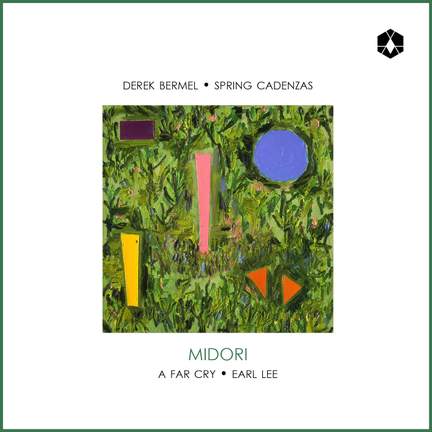
New. Bermel - Spring Cadenzas
Midori (violin), A Far Cry, Earl Lee
Purchase product
About
Artistic collaborators have become my most essential teachers, and the story of composing Spring Cadenzas is linked to my friendship with Midori. The piece’s evolution took twists and turns that neither of us could have predicted at the outset, but one constant throughout the process was the invaluable feedback Midori provided on the nuances of string playing. Her extraordinary artistry, brilliant technique, and inquisitive yet exacting nature engendered insights from both practical and aesthetic perspectives, reflecting the work back to me in multiple dimensions through the lens of her violin mastery.
Midori wrote me in the fall of 2020 to ask for a concerto to perform as part of her Orchestra Residencies Program. I had written a set of violin etudes for her a decade earlier, and I knew that she was passionately devoted to education. But at this moment the whole world faced a particular challenge; COVID-19 was raging internationally, and all the facets normally comprising a student’s music education – tuning, ensemble playing, interaction with others – had disappeared in a flash. Attempting to overcome our massive and sudden isolation, orchestras turned to technological solutions. Projects often required musicians to record their part over a click track, to be collectively assembled later by engineers. Computer programs that had been largely experimental were being frenziedly road-tested by the arts establishment, presenters were pouring whole budgets into remote technology, and applications – explored mainly in university settings – were exploding into mainstream use and being touted as indispensable tools.
With all these red flags waving, I elected to navigate directly into the wind. So I began sketching a concerto structure with latency as a feature, rather than a drawback, centering Midori as the linchpin. During my student days, I had witnessed a fascinating performance of Ligeti’s Piano Concerto – a work with the baroque sensibility of continuous motion in the solo part – in which the ensemble continually fell apart but the pianist soldiered on, anchoring the piece. That bizarre remembrance prompted me to envision a series of cadenzas linked by common musical material. Those cadenzas, I reckoned, could form the concerto’s skeleton, and if technology faltered or lagged, Midori would continue to play; so as long I kept the aligning points “soft”, the structure would remain fundementally intact. In other words, reversing the function of cadenzas – from extensions to focal points – paved the way for unity in the wake of latency.
Midori had always envisioned continuing to perform the work once some “normalcy” returned. To that end, as the pandemic began to recede, I expanded the orchestration to the full version heard on this recording, rendered with refinement and care by producer Jesse Lewis and his talented team at Immersive Music Project. I’m grateful for the musicality breathed into it by the virtuosic orchestra A Far Cry along with the inspiring young musicians from Boston’s STEP Program. And, of course, to Midori, the beating heart of Spring Cadenzas.
(Derek Bermel)