Special offer. J.E. Bach: 6 Sonatas For Violin & Fortepiano
Susanna Pisana (violin), Maurizio Paciariello (piano)
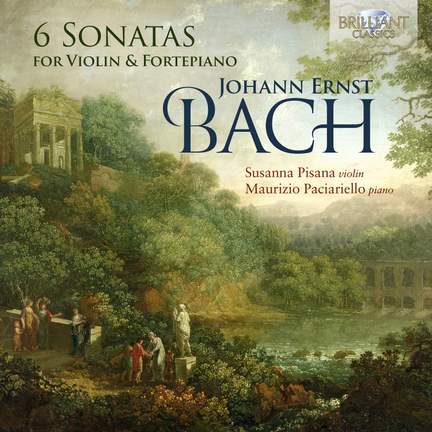
Special offer. J.E. Bach: 6 Sonatas For Violin & Fortepiano
Susanna Pisana (violin), Maurizio Paciariello (piano)
Purchase product

About
Johann Ernst Bach, the third-born son of Johanna Sophia Siefer and Johann Bernhard Bach, was a musician and organist at the Georgenkirche in Eisenach. He was taught first by his father and then, from January 1737 in Leipzig by his uncle and godfather Johann Sebastian Bach, when he moved there to attend the Thomasschule and later to study law. He was forced to abandon his studies there in 1741 upon being called back to Eisenach to help his ill father, and though Ernst missed the musical activity at Leipzig he was persuaded by Johann Sebastian to remain by his father’s side. He eventually succeeded him in the organist post at Eisenach in 1749.
J.E. Bach’s 6 Sonatas for fortepiano & violin are among the few works the composer managed to have published during his lifetime: the first three in 1770 and the remainder in 1772. Although critics deemed them to be ‘too modern’, they were received so well by the public that a new edition was released in 1775.
Their title does not bear the designation ‘with violin accompaniment’ typical of the time but rather ‘sonatas for fortepiano and a violin’: the two instruments are afforded equal importance. In the final three sonatas, the structures become more complex and reveal inspiration from early proponents of classicism like C.P.E. Bach. Although Johann Ernst was known as an organist and harpsichordist, the writing in the fast movements and the lyricism of the slow sections, as well as his inclusion of dynamic markings, suggest that these works were designed for the newly invented fortepiano. All six sonatas are divided into three movements, alternating fast–slow–fast in line with Italian symphonic style.
Contents and tracklist
- Susanna Pisana, Maurizio Paciariello
- Susanna Pisana, Maurizio Paciariello
- Susanna Pisana, Maurizio Paciariello
- Susanna Pisana, Maurizio Paciariello
- Susanna Pisana, Maurizio Paciariello
- Susanna Pisana, Maurizio Paciariello