Pergolesi: A Neapolitan Stabat Mater
A new perspective from G.B Pergolesi's masterpiece
Franck-Emmanuel Comte (organ & conductor)
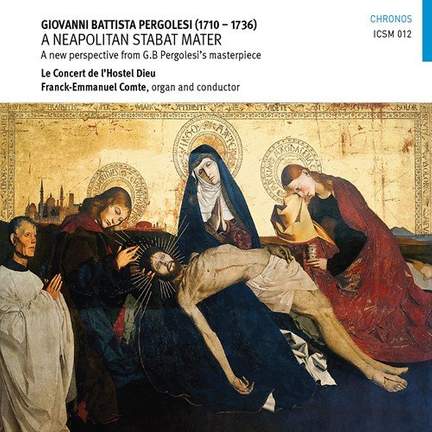
The singers, accompanied by period instruments, bring a dramatic, pulsating and reverential approach to their performance. It’s a unique concept.
Pergolesi: A Neapolitan Stabat Mater
A new perspective from G.B Pergolesi's masterpiece
Franck-Emmanuel Comte (organ & conductor)
Purchase product
The singers, accompanied by period instruments, bring a dramatic, pulsating and reverential approach to their performance. It’s a unique concept.
About
Since the middle of the 18th century, Pergolesi’s Stabat Mater has been an absolute triumph all over Europe. Its initial success in Lyon can be accredited to the booming musical societies. Franck-Emmanuel Comte found a very unusual manuscript of the Stabat Mater. This manuscript is presented in an unexpected arrangement. Apart from a few minor modifications in the instrumental parts, the second solo voice part is entrusted to a baritone (without a doubt because of the disappearance of the castrati), while the fugues and verse O quam tristisare arranged for five voices. Thus, the Latin poem takes on a whole new dimension, gaining theatricality and dramatic emphasis.
Contents and tracklist
- Franck-Emmanuel Comte (organ & conductor)
- Le Concert de l'Hostel Dieu
Awards and reviews
 May/June 2019
The singers, accompanied by period instruments, bring a dramatic, pulsating and reverential approach to their performance. It’s a unique concept.
 June 2019
Pergolesi comes out of it very well but it is the extraneous matter that holds the attention, culminating in a rendition of the opening verses of the Stabat mater, in plainchant ornamented according to local custom, of hair-raising intensity.