Haydn: Piano Sonatas
Markus Becker (piano)
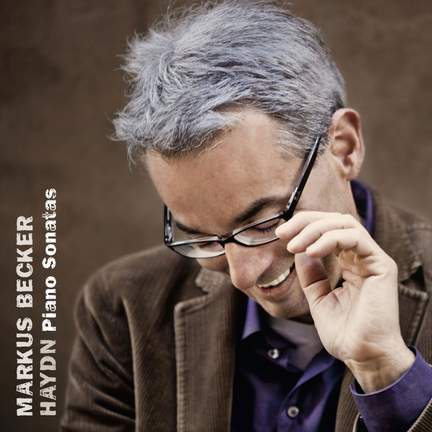
Haydn: Piano Sonatas
Markus Becker (piano)
Purchase product

About
Haydn’s piano sonatas have thrilled me since childhood.
This music may seem easy to grasp at first glance: so much seems clear and straightforward. However, once you take a closer look and spend more time playing and listening to Haydn’s music, it develops an endless, multifaceted life of its own. It becomes more concrete and at the same time more mysterious.
Unexpected turns of phrase, sudden occurrences, humorous juxtapositions and startling asymmetries are just as much a part of this music as its extended melodic arcs that make the piano sing. Haydn’s music forms an intimate bond between song and speech. In each movement of the ca. 60 piano sonatas he wrote, we meet a personality, an unmistakeable character, evoked in detail.
Haydn was long viewed as the mere forerunner of Vienna Classicism – Mozart’s and Beethoven’s Papa, so to speak. His sonatas were mainly regarded as witty, useful pedagogical material. Several generations seem to have been unaware of his profoundly nuanced approach. Perhaps, however, Haydn’s keyboard oeuvre might require even better interpreters than the works written by his towering colleagues.
One cannot clothe this music in an adequate form without applying a great deal of fantasy in one’s choice of timbres, along with a keen sense for musical rhetoric and careful regard for phrasing. Most of all, the Haydn performer should be able to modify the entire timbre effect and redistribute the balance among parts from one moment to the next. We must not forget that he was born way back in 1732: Haydn thus still had one foot in the Baroque age, as one can tell from the latent polyphony and frequent figures of musical rhetoric. His variegated types of articulation cover a wide spectrum: dozens of nuances fill out the range between Haydn’s profound, songlike legato and his humorously accentuated staccato.
Here is not where we will find Beethoven’s force and dramatic vigour, neither Mozart’s ethereal beauty. Haydn wrote a music of profound humanity, with a basic outlook similar to what the German Romantics called “humour”: a reflection of human life with all its beauties, unfathomable depths, hopes, losses, crises and joys, all shouldered with a large dose of passion and irony.
Contents and tracklist
- Markus Becker (piano)
- Recorded: 2016
- Markus Becker (piano)
- Recorded: 2016
- Markus Becker (piano)
- Recorded: 2016
- Markus Becker (piano)
- Recorded: 2016
- Markus Becker (piano)
- Recorded: 2016
- Markus Becker (piano)
- Recorded: 2016
- Markus Becker (piano)
- Recorded: 2016
- Markus Becker (piano)
- Recorded: 2016
- Markus Becker (piano)
- Recorded: 2016
- Markus Becker (piano)
- Recorded: 2016
- Markus Becker (piano)
- Recorded: 2016
- Markus Becker (piano)
- Recorded: 2016
- Markus Becker (piano)
- Recorded: 2016
- Markus Becker (piano)
- Recorded: 2016
- Markus Becker (piano)
- Recorded: 2016