Chris Newman: Ghosts
First Recordings
Chris Newman (voice)
Ensemble KNM Berlin [Kammerensemble Neue Musik], Steffen Tast
It’s naggingly memorable music in which the process by which the notes are generated – often an entirely non-musical one – has always mattered at least as much as the final aural result.
Chris Newman: Ghosts
First Recordings
Chris Newman (voice)
Ensemble KNM Berlin [Kammerensemble Neue Musik], Steffen Tast
Purchase product
It’s naggingly memorable music in which the process by which the notes are generated – often an entirely non-musical one – has always mattered at least as much as the final aural result.
About
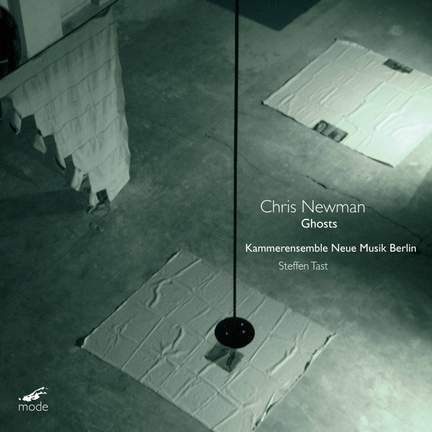
This CD collects four chamber works in Newman’s idiosyncratic style, performed by one of Berlin’s leading new music ensembles. Newman himself appears a vocal soloist in the work 'Cologne'. Liner notes are by the composer and the cover pictures one of his art installations. Chris Newman (b.1958) is an experimental interdisciplinary artist working the mediums of music, painting, video, drawing and literature. He studied music at King’s College London. During this time he met the Russian poet Eugene Dubnov and started to translate Russian poets (Osip Mandelstam, Velimir Khlebnikov), this process of translating proving important for his later work (eg from one medium to another / from life to art). Newman moved to Cologne, Germany, in 1980 to study with Mauricio Kagel. He founded chamber-punk rock band Janet Smith in 1983 and met Morton Feldman in 1984.
Since the beginning of the 1980's Newman’s music pieces have been performed at concerts and festivals and recorded for radio productions. He now lives in Berlin.
Contents and tracklist
- KNM Streichquartett
- Steffen Tast
- Chris Newman
- KNM Streichquartett
- Steffen Tast
- KNM Streichquartett
- Steffen Tast
- KNM Streichquartett
- Steffen Tast
Awards and reviews
 8th January 2015
It’s naggingly memorable music in which the process by which the notes are generated – often an entirely non-musical one – has always mattered at least as much as the final aural result.