

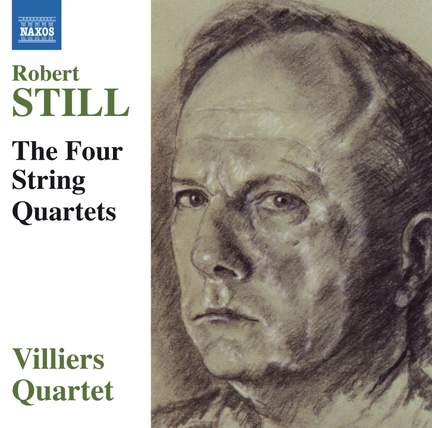
Special offer. Still, R: The Four String Quartets
Villiers Quartet
While Still's first two quartets are tonal and (mostly) bland, the Bartok-to-Seiber modernism of the Third and Fourth reveals remarkable musical strength. Fine performances.
Special offer. Still, R: The Four String Quartets
Villiers Quartet
Purchase product

We pay more royalties to artists and composers than any other streaming service with our innovative Fair Play pay-per-second model
We pay artists and composers fairly with our pay-per-second model
While Still's first two quartets are tonal and (mostly) bland, the Bartok-to-Seiber modernism of the Third and Fourth reveals remarkable musical strength. Fine performances.
About
Robert Still’s four string quartets vividly encapsulate his compositional career. The first two, of which No. 1 was first performed in 1948, display an early inclination towards folk-song and preclassical models, while Nos. 3 and 4, written during the 1960s “without key”, reflect his later change towards a continental European-influenced method of composition that can be summed up by the abandonment of writing in a tonal style. These world première recordings owe a considerable debt to the editorial expertise of James Dickenson, leader of the Villiers Quartet, who prepared the performance material from the original scores.
Contents and tracklist
Still, R:
String Quartet No. 1
Work length16:36
- Villiers Quartet
I. Adagio - Allegretto seriouso
Track length8:37
II. Allegretto giocondo
Track length3:23
III. Tempo di marcia quasi passacaglia
Track length4:36
Still, R:
String Quartet No. 2
Work length17:53
- Villiers Quartet
I. Allegro risoluto
Track length4:36
II. Molto adagio. Molto legato
Track length9:17
III. Allegro vivo
Track length4:00
Still, R:
String Quartet No. 3
Work length22:19
- Villiers Quartet
I. Allegro marcato
Track length6:14
II. Adagio sostenuto
Track length6:37
III. Allegro. Pressante
Track length2:55
IV. Tempo di marcia
Track length6:33
Still, R:
String Quartet No. 4
Work length19:21
- Villiers Quartet
I. Allegro agitato
Track length3:54
II. Poco lento
Track length5:19
III. Tempo di marcia
Track length3:30
IV. Angoscioso
Track length6:38
Awards and reviews
 Christmas 2014
While Still's first two quartets are tonal and (mostly) bland, the Bartok-to-Seiber modernism of the Third and Fourth reveals remarkable musical strength. Fine performances.
 January 2015
No praise can be too high for these sublimely articulated and concentrated readings by the Villiers Quartet, for whose leader, James Dickenson, the whole project was very much a labour of love. Admirable sound and balance too.
Classical Music
This young ensemble relishes the challenges here – and at Naxos’s price this should be snapped up.
