Raphaela Gromes & Julian Riem: Violoncello sonatas
Raphaela Gromes (cello), Julian Riem (piano)
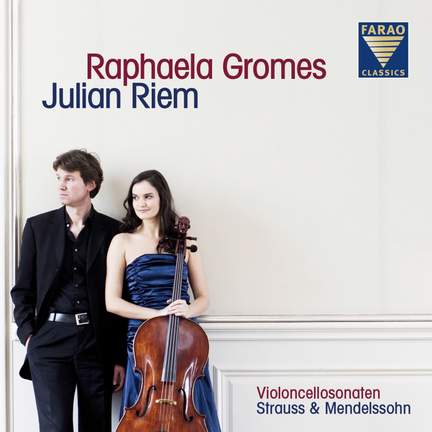
Raphaela Gromes & Julian Riem: Violoncello sonatas
Raphaela Gromes (cello), Julian Riem (piano)
Purchase product

About
“My sonata pleased the audience immensely, and it received colossal applause. I was congratulated from all sides, and everyone was of the same opinion”, Richard Strauss proudly wrote to his parents on 19 December 1883 after the work's first performance.
Strauss started work on his only cello sonata in 1881 at the age of 17, completing it two years later. By then, he had already done a lot of composing – like Mendelssohn Bartholdy, he was very much a child prodigy. In fact, Mendelssohn's influence can be clearly heard in Strauss's early works, as here in the Finale of the Cello Sonata: it recalls the lightness of A Midsummer Night's Dream or the playfulness of the piano piece Rondo Capriccioso.
In the Romance – originally composed for cello and orchestra – Strauss displays the same free and innovative use of form that he does in the sonata: sonata form, rondo and Lied blend to create an unfettered, associative structure that unfolds unconventionally, while still possessing musical and narrative coherence and tension.
Unlike the two youthful works by Richard Strauss, Mendelssohn's Sonata for Cello and Piano, op.58 is the product of a mature 32-year-old. Mendelssohn laboured over his Cello Sonata for more than two years. The result is an extraordinarily expansive work that, with its four long movements, goes far beyond the constraints of earlier chamber music works.
“The very young cellist Raphaela Gromes is one of the finest and most intensive musical talents that I have come across in a long time” - Brigitte Fassbaender, after the 2012 Richard Strauss Competition, from which Raphaela Gromes emerged as the winner.